


GULF HEALTHCARE STUDY MATERIALS & CURRICULUM BLUEPRINT HUB
Gulf Healthcare Licensing Exam Study Materials: Books, Blueprints & Question Banks
Definitive preparation textbooks, official syllabus blueprints, high-yield clinical vignettes, and calculation formularies for medical practitioners, nurses, pharmacists, and allied specialists preparing for DHA, MOH, HAAD/DOH, SCFHS, QCHP, and OMSB computer-based testing. Overseas Healthcare Consultant in Koramangala, Bengaluru delivers authoritative curriculum breakdowns, computerized CBT mock workstation orientation, and intensive coaching exclusively for Registered Nurses and Pharmacists with a verified 98.4% first-attempt success rate.
DHA • MOH • DOH • SCFHS • QCHP • OMSB
Saunders NCLEX • BNF 86/87 • Tintinalli • Lippincott
Clinical Vignettes & Dosage Calculations
Coaching Exclusively for Nurses & Pharmacists
Request Study Material Guidance
Connect with our Koramangala healthcare advisors for official blueprint breakdowns, recommended reading lists, and specialized coaching for nurses and pharmacists.
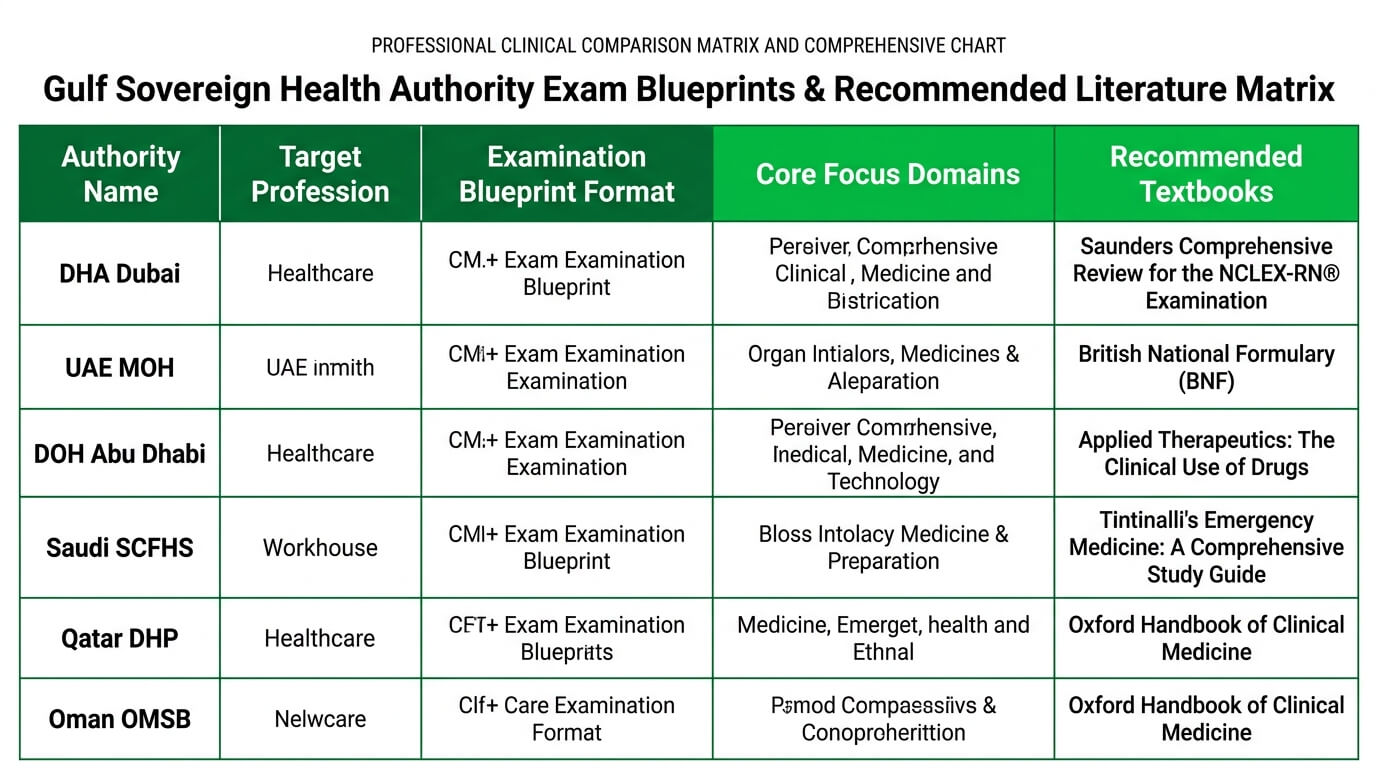
Authority-Specific Exam Blueprints & Recommended Literature
Compare sovereign examination curricula, question volumes, test durations, passing benchmarks, and primary reference manuals across all six Gulf healthcare jurisdictions.
| Authority | Exam Title | Question Format | Testing Time | Core Focus Domains | Recommended Core Texts |
|---|---|---|---|---|---|
| DHA (Dubai) | DHA Prometric | 150 MCQs (Nurses) / 100 (Pharma) | 180 / 150 mins | Adult Health, Acute Care, Pharma Safety, NABIDH Standards | Saunders NCLEX, BNF 86/87, Lippincott Practice |
| MOH (UAE) | MOH Prometric | 100 MCQs | 150 mins | Community Health, Primary Care, Triage, Outpatient Therapeutics | Saunders, WHO Protocols, Remington Science |
| DOH (Abu Dhabi) | DOH / HAAD CBT | 100 – 150 MCQs | 150 – 180 mins | Complex Diagnostic Vignettes, Lab Panels, Malaffi HIE Protocols | Mosby Review, Tintinalli, Goodman & Gilman |
| SCFHS (Saudi) | SMLE / SNLE / SPLE | 150 – 300 MCQs (Blocks) | 180 – 360 mins | Comprehensive Curricula, Antimicrobial Stewardship, Critical Care | Lippincott, Applied Therapeutics, BNF 86/87 |
| QCHP (Qatar) | DHP Prometric | 100 MCQs | 150 mins | Patient Safety, Evidence-Based Medicine, Hamad Clinical Pathways | Saunders NCLEX, Katzung Pharmacology, DiPiro |
| OMSB (Oman) | OMSB Prometric | 70 – 100 MCQs | 120 – 150 mins | Bedside Practice, Clinical Ethics, Prescribing, Emergency Triage | Oxford Handbook, Saunders, BNF 86/87 |
In-Depth Health Authority Examination Blueprints & Test Structures
Dubai Health Authority (DHA Prometric): Exam Blueprint, Scoring Matrix & Syllabus Domains
The Dubai Health Authority (DHA) licensing examination is administered globally via Prometric computerized test centers. The assessment evaluates candidate competency against the Dubai Healthcare Professional Qualification Requirements (PQR). The examination blueprint differs substantially between cadres in structure, duration, and clinical emphasis:
- Registered Nurses (RN): 150 Multiple Choice Questions administered in a single 180-minute block. The syllabus is weighted across Adult Medical-Surgical Nursing (30%), Critical Care & Emergency Triage (20%), Maternal & Child Health (15%), Pediatric Nursing (15%), Pharmacological Safety & Dosage Administration (10%), and Professional Ethics & Healthcare Governance (10%). Clinical questions present situational vignettes requiring critical prioritization based on the ABCDE (Airway, Breathing, Circulation, Disability, Exposure) assessment algorithm.
- Clinical & Dispensing Pharmacists: 100 Multiple Choice Questions administered over 150 minutes. The curriculum allocates 35% to Clinical Therapeutics and Disease State Management, 25% to Pharmaceutical Calculations and Compounding, 20% to Pharmacology, Pharmacokinetics, and Drug-Drug Interactions, 10% to Good Pharmacy Practice (GPP) and Dubai Controlled Drug Regulations, and 10% to Medication Safety, Pharmacovigilance, and Adverse Drug Reaction Reporting.
- General Practitioners & Medical Specialists: 150 Multiple Choice Questions evaluating acute diagnostics, chronic disease management, emergency stabilization, interpretation of laboratory and imaging panels, and clinical ethics in compliance with Dubai regulatory standards.
Candidates receive an immediate provisional score notification at the testing center upon workstation submission. Unofficial results report qualifying pass status, while official score reports reflect scaled scores archived directly within the DHA Sheryan portal within 24 to 48 hours.
Ministry of Health and Prevention (MOH UAE): Northern Emirates Blueprint & Clinical Priorities
The Ministry of Health and Prevention (MOH) licenses healthcare professionals practicing across the five Northern Emirates of the UAE: Sharjah, Ajman, Ras Al Khaimah, Fujairah, and Umm Al Quwain. The MOH Prometric exam is tailored toward public health standards, primary care triage, and emergency medicine:
- Exam Delivery: 100 Multiple Choice Questions conducted over 150 minutes across authorized Prometric facilities globally.
- Nursing Syllabus Focus: Emphasizes primary health care, infectious disease protocols (including tuberculosis, viral hepatitis, and Middle East Respiratory Syndrome surveillance), pediatric immunization schedules, community nursing, and outpatient acute emergency stabilization.
- Pharmacy Blueprint: Rigorous examination of outpatient dispensing, national essential drug lists, antimicrobial stewardship policies, over-the-counter (OTC) consultation protocols, and controlled substances registers according to Federal Law No. 4 of 1983.
- Passing Standard: Qualifying mark typically established at 60% for nurses and pharmacists, and 65% for medical practitioners, evaluated on a non-adaptive linear test item scale.
Department of Health Abu Dhabi (DOH / HAAD): Clinical Reasoning & Malaffi Integration
The Department of Health Abu Dhabi (DOH, formerly HAAD) licensing examination is renowned for presenting the most clinically rigorous computerized assessment among UAE jurisdictions. Candidates encounter advanced clinical vignettes requiring multi-step diagnostic deductions and acute pharmacological interventions:
- Testing Structure: 100 to 150 scenario-based questions administered over 150 to 180 minutes via Pearson VUE or Prometric networks depending on cadre scheduling.
- Advanced Case Vignettes: Questions provide multi-parameter clinical presentations including comprehensive hemodynamic records, arterial blood gas analyses, full blood count indices, and electrolyte imbalances. Candidates must diagnose the underlying clinical anomaly and select the guideline-concordant intervention.
- Digital Health & Governance: Incorporates principles of Malaffi (Abu Dhabi Health Information Exchange), clinical quality indicators (Jawda standards), infection control bundles, and patient rights within the Emirate of Abu Dhabi.
Saudi Commission for Health Specialties (SCFHS): SMLE, SNLE & SPLE Block Testing Architecture
The Saudi Commission for Health Specialties (SCFHS) governs professional healthcare licensure across the Kingdom of Saudi Arabia. Licensing examinations are segmented into dedicated national assessments: the Saudi Medical Licensing Examination (SMLE), Saudi Nursing Licensing Examination (SNLE), and Saudi Pharmacist Licensing Examination (SPLE):
- SNLE (Nursing): Comprises 150 to 300 questions divided into timed testing blocks (often 3 blocks of 100 questions or 2 blocks of 75 questions). Domains encompass Nursing Care of Adults (40%), Pediatric & Neonatal Nursing (20%), Maternal & Reproductive Health (20%), Critical Care & Triage (10%), and Professional Law, Ethics & Patient Advocacy (10%).
- SPLE (Pharmacy): Consists of 300 questions administered over 360 minutes across two distinct testing blocks with a mandatory break. Testing domains include Clinical Pharmacy & Disease Therapeutics (40%), Pharmaceutical Sciences & Calculations (25%), Pharmacy Practice & Dispensing (20%), and Toxicology, Poison Prevention & Regulatory Laws (15%).
- SMLE (Medicine): Evaluates 300 clinical vignettes covering Internal Medicine, Surgery, Pediatrics, Obstetrics and Gynecology, and Emergency Medicine in accordance with Saudi Vision 2030 clinical transformation benchmarks.
Oman Medical Specialty Board (OMSB) & Qatar Department of Healthcare Professions (DHP)
Healthcare licensing examinations for the Sultanate of Oman (OMSB) and the State of Qatar (DHP / QCHP) feature specialized computerized assessments tailored to their national healthcare delivery models:
- OMSB Prometric (Oman): Structured as 70 to 100 MCQs delivered over 120 to 150 minutes. The blueprint focuses on bedside diagnostic fundamentals, clinical ethics, emergency medicine, primary care triage, and adherence to the Oman National Formulary. A unique feature is its emphasis on clinical decision-making within secondary and tertiary public hospital referral networks (Royal Hospital, Khoula Hospital, Sohar Hospital).
- Qatar DHP Prometric (Qatar): 100 MCQs delivered over 150 minutes. The syllabus aligns closely with Joint Commission International (JCI) hospital quality benchmarks and the Hamad Medical Corporation (HMC) clinical guidelines, with prominent weighting on patient safety cultures, medication reconciliation, and evidence-based clinical therapeutics.
Cadre-Specific Study Roadmaps: Physicians, Nurses, Pharmacists & Allied Health
Targeted curricular recommendations and gold-standard medical textbooks tailored precisely to each professional healthcare cadre.
Registered Nurses: Review Manuals & Triage Protocols
The international gold standard for Gulf nurse preparation is anchored by Saunders Comprehensive Review for the NCLEX-RN Examination (Linda Anne Silvestri). This comprehensive textbook covers medical-surgical nursing, pediatric care, maternity and newborn wellness, psychiatric nursing, and pharmacological fundamentals. Supplementary references include Lippincott Manual of Nursing Practice and Mosby Comprehensive Review of Nursing. Candidates must master Emergency Severity Index (ESI) triage categorization, cardiac dysrhythmia recognition, fluid and electrolyte balance calculations (pediatric maintenance fluids and IV drop rates), and infection control standards.
Clinical Pharmacists: BNF, Calculations & Applied Therapeutics
Pharmacist Prometric examinations evaluate applied clinical therapeutics and mathematical precision. The essential reference manual is the British National Formulary (BNF 86 / BNF 87), providing authoritative guidance on prescribing, dispensing, drug interactions, contraindications, and organ-impairment dosage adjustments. Candidates pair the BNF with Applied Therapeutics: The Clinical Use of Drugs or Pharmacotherapy: A Pathophysiologic Approach (DiPiro) to master chronic disease management. Mastering calculations—including creatinine clearance (Cockcroft-Gault), pediatric BSA dosage, alligation alternate, and parenteral nutrition osmolarity—is critical.
Medical Doctors & Specialists: Vignettes & Emergency Algorithms
Physicians undertaking the SMLE, DHA, MOH, or OMSB medical assessments encounter complex clinical case presentations. Recommended literature includes Oxford Handbook of Clinical Medicine, First Aid for the USMLE Step 2 CK, Step-Up to Medicine, and Tintinalli Emergency Medicine Manual. Doctors must demonstrate diagnostic acumen in interpreting 12-lead ECGs, chest radiographs, CT scans, and multi-organ biochemical profiles, alongside mastery of ACLS, ATLS, and PALS algorithms.
Dentists & Allied Health Cadres: Specialty Blueprints
Dental surgeons preparing for Gulf examinations consult Cawson Essentials of Oral Pathology and Oral Medicine, Contemporary Oral and Maxillofacial Surgery, and Little and Falace Dental Management of the Medically Compromised Patient. Allied health practitioners—including medical laboratory technologists, radiographers, physiotherapists, and EMTs—must review domain-specific textbooks such as Henry Clinical Diagnosis and Management by Laboratory Methods and Clark Positioning in Radiography.
Curated Medical Literature Directory by Healthcare Specialization
Nursing Foundational Texts
1. Saunders NCLEX-RN Examination: Definitive resource for comprehensive organ system reviews, test-taking strategies, and rationale-rich practice questions.
2. Lippincott Manual of Nursing Practice: Authoritative bedside clinical procedures, surgical asepsis, documentation, and patient safety protocols.
3. Davis Drug Guide for Nurses: Critical resource for nursing implications, high-alert drug lists, IV compatibility, and black-box warnings.
Pharmacy Clinical References
1. British National Formulary (BNF 86/87): Sovereign guidance on drug monographs, dosage schedules, hepatic/renal titrations, and pregnancy risk categories.
2. DiPiro Pharmacotherapy: Comprehensive pathophysiology and evidence-based pharmacotherapeutic decision algorithms.
3. Comprehensive Pharmacy Review (Shargel): High-yield coverage of medicinal chemistry, biopharmaceutics, calculations, and federal pharmacy law.
Medical Doctor Handbooks
1. Oxford Handbook of Clinical Medicine: Rapid clinical management protocols, differential diagnosis tables, and bedside clinical pearls.
2. First Aid for USMLE Step 2 CK: High-yield multi-system clinical vignettes, diagnostic flowcharts, and emergency intervention algorithms.
3. Tintinalli Emergency Medicine: Gold standard for trauma resuscitation, toxicology, acute coronary syndromes, and stroke intervention protocols.
High-Yield Clinical Calculations & Pharmacotherapy Formularies
Mastering mathematical accuracy and clinical calculation algorithms tested across Gulf Prometric and Pearson VUE computerized examinations.
Critical Testing Alert: Mathematical Precision & On-Screen Calculators
Gulf licensing exams feature 10 to 18 mathematical calculation questions that carry significant discriminatory weight. Prometric test workstations provide an on-screen basic calculator; however, candidates must master exact algebraic dimensional analysis, metric unit conversions, and formula memorization without relying on external aids.
Nursing Calculations: Drops-Per-Minute, Pediatric Dosing & Fluid Resuscitation
Registered nurses preparing for DHA, MOH, HAAD, SNLE, or OMSB exams encounter several mandatory calculation categories:
-
Intravenous Infusion Drop Rates (gtt/min):Flow Rate (gtt/min) = [Total Volume to Infuse (mL) × Drop Factor (gtt/mL)] ÷ Infusion Time (minutes)
Clinical Vignette Example: An order prescribes 1,000 mL of 0.9% Normal Saline to infuse over 8 hours using a macrodrip tubing set with a calibration of 15 gtt/mL.
Solution: Time in minutes = 8 hours × 60 = 480 minutes. Flow Rate = (1,000 × 15) ÷ 480 = 15,000 ÷ 480 = 31.25 → 31 gtt/min. -
Pediatric Weight-Based Dosage Verification:Daily Dose (mg) = Child Weight (kg) × Prescribed Dose (mg/kg/day) ÷ Doses Per Day
Clinical Vignette Example: A pediatrician orders amoxicillin for a 14 kg child diagnosed with acute otitis media at 45 mg/kg/day divided into three equal doses every 8 hours. Available suspension is 250 mg / 5 mL.
Solution: Total daily dose = 14 kg × 45 mg/kg = 630 mg/day. Individual dose = 630 ÷ 3 = 210 mg per dose. Volume = (210 mg × 5 mL) ÷ 250 mg = 4.2 mL per dose. -
Parkland Formula for Burn Resuscitation:Total 24-Hour Lactated Ringer’s Volume (mL) = 4 mL × Weight (kg) × % TBSA Second/Third-Degree Burns
Clinical Protocol: Administer 50% of the total calculated volume over the first 8 hours post-burn injury; administer the remaining 50% over the subsequent 16 hours.
-
Holiday-Segar 4-2-1 Pediatric Maintenance Fluid Method:First 10 kg: 100 mL/kg/day (4 mL/kg/hr)
Next 10 kg (11-20 kg): 50 mL/kg/day (2 mL/kg/hr)
Each kg > 20 kg: 20 mL/kg/day (1 mL/kg/hr)Clinical Vignette: A 26 kg pediatric inpatient requires IV maintenance hydration. Calculation: (10 × 4) + (10 × 2) + (6 × 1) = 40 + 20 + 6 = 66 mL/hr.
Pharmacist Calculations: Cockcroft-Gault CrCl, Alligation, Osmolarity & Pharmacokinetics
Candidates taking the SPLE, DHA, MOH, or QCHP pharmacist licensing examinations must execute precise clinical pharmacotherapy mathematics without error:
-
Creatinine Clearance by Cockcroft-Gault Equation:CrCl (mL/min) = [ (140 – Age) × Weight (kg) ] ÷ [ 72 × Serum Creatinine (mg/dL) ]
(Multiply result by 0.85 for female patients)Clinical Note on Body Weight: Use Actual Body Weight (ABW) if less than Ideal Body Weight (IBW). If ABW exceeds IBW by greater than 120%, utilize Adjusted Body Weight: AdjBW = IBW + 0.4 × (ABW – IBW). Ideal Body Weight is calculated as:
• Males: IBW = 50 kg + 2.3 kg × (height in inches over 60 inches)
• Females: IBW = 45.5 kg + 2.3 kg × (height in inches over 60 inches). -
Alligation Alternate Compounding Method:
Used to determine the proportion of two different strength stock solutions required to prepare an intermediate target strength.
Higher Strength (H) − Target Strength (T) = Parts of Lower Strength
Target Strength (T) − Lower Strength (L) = Parts of Higher StrengthExample: Prepare 500 mL of 70% alcohol using 95% alcohol stock and sterile water (0%). Higher difference = 95 – 70 = 25 parts water. Lower difference = 70 – 0 = 70 parts 95% alcohol. Total parts = 95. Volume of 95% alcohol needed = (70 ÷ 95) × 500 mL = 368.4 mL.
-
Total Parenteral Nutrition (TPN) Caloric & Osmolarity Estimates:Hydrated Dextrose Monohydrate = 3.4 kcal/gram (5 mOsm/g)
Amino Acids = 4.0 kcal/gram (10 mOsm/g)
Lipid Emulsion 10% = 1.1 kcal/mL | Lipid Emulsion 20% = 2.0 kcal/mLClinical Practice Limit: TPN solutions with osmolarity exceeding 900 mOsm/L must be administered through a central venous catheter (CVC) rather than peripheral venous access to prevent thrombophlebitis.
-
Loading Dose & Therapeutic Drug Monitoring (TDM) Targets:Loading Dose (LD) = (Target Peak Concentration × Volume of Distribution Vd) ÷ Bioavailability (F)
Elimination Rate Constant (k) = Clearance (Cl) ÷ Vd | Half-Life (t1/2) = 0.693 ÷ kEssential Therapeutic Troughs to Memorize: Vancomycin trough 15 to 20 mcg/mL for MRSA bacteremia/pneumonia; Digoxin 0.5 to 0.9 ng/mL for heart failure; Gentamicin trough < 1 mcg/mL to avoid nephrotoxicity; Phenytoin total serum concentration 10 to 20 mcg/mL.
Physician Diagnostic Interpretation: Arterial Blood Gases, ECG Vector Maps & Shock Indices
Physicians undertaking the SMLE, DHA, MOH, or OMSB medical licensing assessments are evaluated on systematic diagnostic interpretation algorithms:
-
Arterial Blood Gas (ABG) Analysis – ROME Framework:
Systematic 3-step evaluation: pH (7.35 – 7.45), PaCO2 (35 – 45 mmHg), HCO3 (22 – 26 mEq/L). ROME mnemonic: Respiratory Opposite (pH ↑ PaCO2 ↓ = alkalosis; pH ↓ PaCO2 ↑ = acidosis), Metabolic Equal (pH ↑ HCO3 ↑ = alkalosis; pH ↓ HCO3 ↓ = acidosis).
Serum Anion Gap = [Na+] − ( [Cl−] + [HCO3−] ) [Normal range: 8 to 12 mEq/L]
High Anion Gap Acidosis Mnemonic (MUDPILES): Methanol, Uremia, DKA, Paraldehyde, Isoniazid/Iron, Lactic acidosis, Ethylene glycol, Salicylates. -
12-Lead Electrocardiogram STEMI Territorial Localization:Anterior Wall: ST elevation in V1 – V4 → Left Anterior Descending (LAD) artery
Inferior Wall: ST elevation in II, III, aVF → Right Coronary Artery (RCA)
Lateral Wall: ST elevation in I, aVL, V5, V6 → Left Circumflex (LCx) artery
Posterior Wall: ST depressions in V1 – V3 with tall R waves → Posterior Descending Artery -
Systemic Shock Index (SI) in Emergency Resuscitation:Shock Index = Heart Rate (bpm) ÷ Systolic Blood Pressure (mmHg)
Interpretation: Normal range is 0.5 to 0.7. A Shock Index exceeding 0.9 indicates occult systemic hypoperfusion, severe hypovolemia, or developing septic collapse, triggering immediate fluid resuscitation or mass transfusion protocols before overt hypotension manifests.
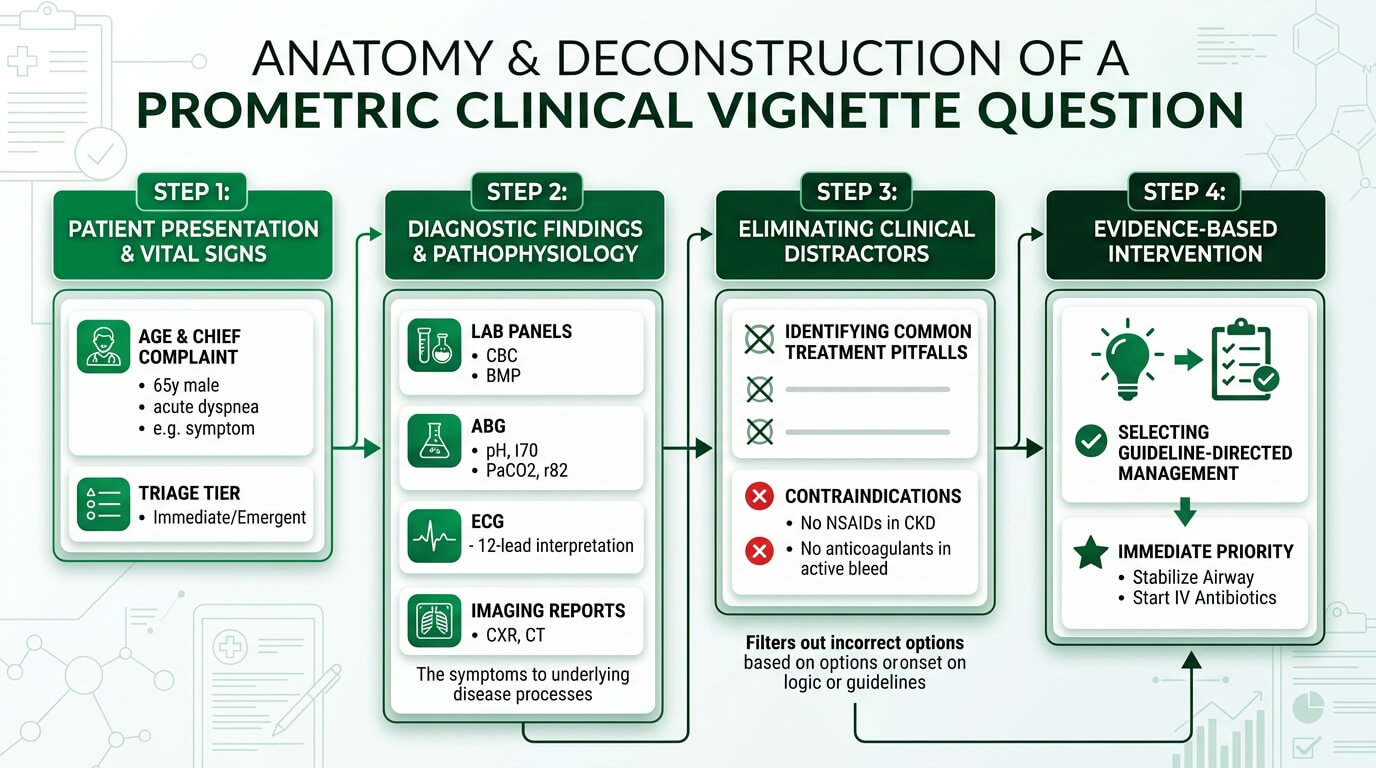
Anatomy of Modern Prometric Multiple-Choice Clinical Vignettes
Deconstructing the four-step clinical reasoning framework used in contemporary Prometric and Pearson VUE test item banking.
1. Patient Presentation & Vital Signs
Every clinical vignette opens with patient demographics, chief complaints, onset timelines, and vital signs (blood pressure, heart rate, respiratory rate, pulse oximetry, temperature). Candidates must immediately identify emergency red flags and prioritize triage severity.
2. Diagnostic Findings & Pathophysiology
The scenario introduces laboratory profiles (CBC, BMP, arterial blood gases), 12-lead ECG strips, or radiological descriptions. Candidates must synthesize findings to deduce the underlying pathophysiological abnormality rather than relying on superficial symptoms.
3. Eliminating Distractors & Interventions
The question stem presents four plausible management options. Candidates must identify contraindicated medications (e.g., NSAIDs in renal impairment), eliminate common management pitfalls, and select the single best evidence-based guideline intervention.
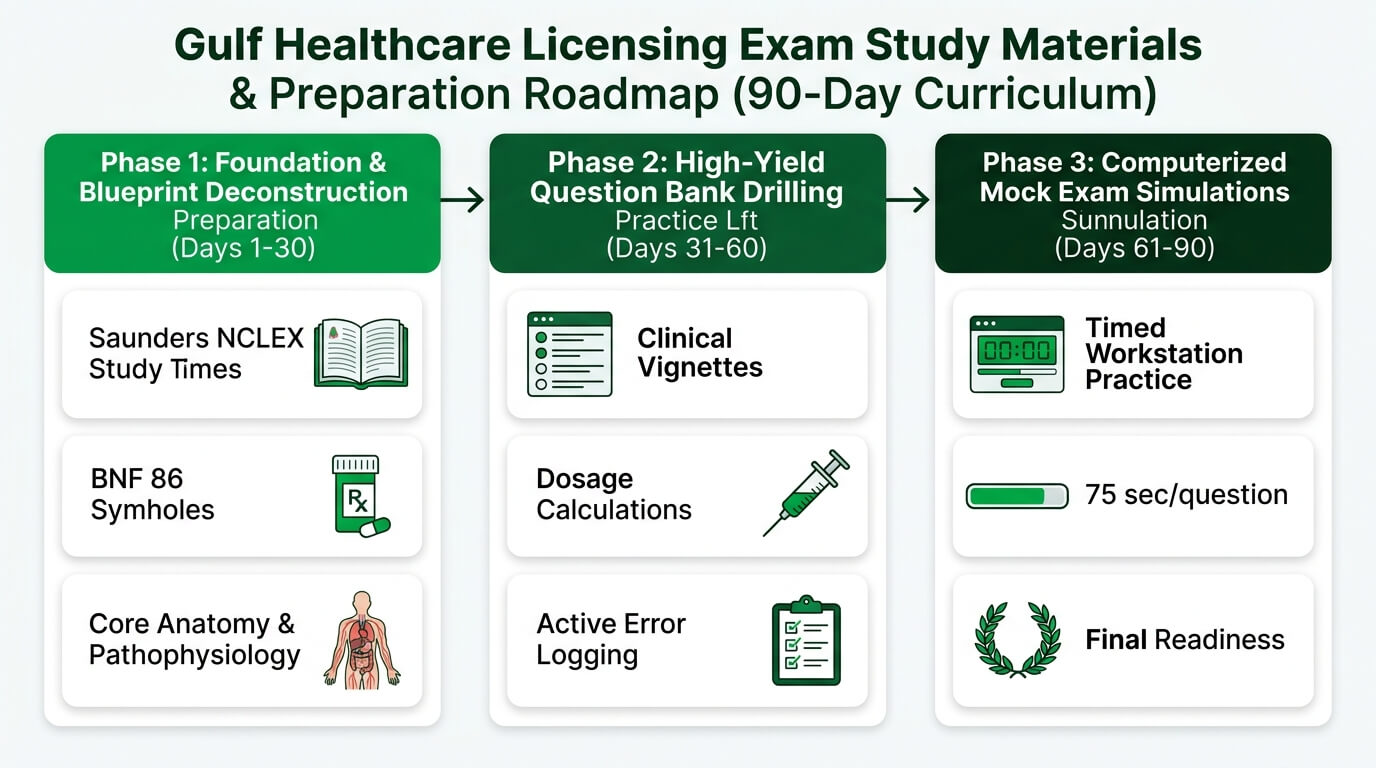
Structuring an Evidence-Based 90-Day Preparation Timeline
A phased, disciplined preparation schedule designed to optimize memory retention, calculation speed, and test-day endurance.
Phase 1: Foundation & Blueprint (Days 1 – 30)
Weeks 1 to 4: Deconstruct target health authority blueprints. Review core subject chapters system-by-system (cardiovascular, respiratory, endocrine, neurological, renal). Build concise summary notes for pathophysiological mechanisms, pharmacological drug classes, and basic calculation formulas. Complete 20 questions daily to establish baseline diagnostic familiarity.
Phase 2: Question Bank Drilling (Days 31 – 60)
Weeks 5 to 8: Transition to active recall. Complete 50 to 75 vignette questions daily, reading complete clinical rationales for both correct and incorrect choices. Conduct daily dosage calculation drills and maintain an active error log to track diagnostic misconceptions. Focus heavily on high-weight subspecialty domains and pharmacology.
Phase 3: CBT Mock Simulations (Days 61 – 90)
Weeks 9 to 12: Execute full-length computerized mock simulations under timed, proctored workstation conditions (pacing at 75 seconds per question). Remediate weak clinical domains identified in error logs, practice on-screen calculator navigation, and finalize examination center appointment booking. Complete final review of patient safety and ethics guidelines.
Overseas Healthcare Consultant Educational Ecosystem in Bengaluru
South Asia leading healthcare regulatory consultancy, providing comprehensive licensing guidance and dedicated clinical coaching.
Specialized Coaching: Nurses & Pharmacists
In strict adherence to corporate policy, OHC delivers intensive clinical examination coaching, curriculum breakdown sessions, computerized mock testing simulations, and live doubt-clearance modules strictly and exclusively for Registered Nurses and Pharmacists. Our expert faculty deconstructs complex nursing vignettes and pharmaceutical calculations into intuitive frameworks, achieving an outstanding 98.4% first-attempt success rate.
Administrative Guidance: Doctors & Allied Health
For medical doctors, dental surgeons, and allied healthcare professionals, OHC provides comprehensive regulatory coordination. This encompasses pre-eligibility credential audits under the Gulf Unified PQR, DataFlow Primary Source Verification (PSV) document compilation, official Eligibility ID processing, Prometric test center booking, and curated reading syllabus roadmaps.
Bengaluru Center & Global Virtual Access
Healthcare professionals can visit our physical counseling office in Koramangala, Bengaluru for personalized one-on-one document audits and study roadmaps. Candidates across India, the Middle East, and worldwide can access live interactive digital classrooms, recorded lecture archives, and direct WhatsApp advisory support.
Frequently Asked Questions: Gulf Healthcare Licensing Books & Preparation
Clear, authoritative answers to common inquiries regarding study materials, question banks, and examination preparation.
1. What are the best recommended study books for the DHA Registered Nurse exam?
2. Which reference books are essential for the Saudi SPLE Pharmacist Prometric exam?
3. Can I pass Gulf Prometric exams by practicing past question dumps alone?
4. Does OHC provide clinical coaching for all healthcare professions?
5. How many months of dedicated study are typically required to clear Prometric exams?
6. What is the primary difference between DHA and SCFHS exam study materials?
7. Are dosage calculations tested heavily in Prometric nurse and pharmacist exams?
8. Where can I access official syllabus blueprints for Gulf health authorities?
9. Does the Prometric exam interface provide an embedded calculator during the test?
10. What is the passing score percentage required for Gulf Prometric examinations?
11. How many times can a candidate retake a Gulf licensing exam if they do not pass?
12. Can study materials prepared for DHA be used to prepare for MOH or HAAD?
13. What clinical topics carry the highest weighting in Gulf nursing exams?
14. Are international textbooks like Oxford Handbook suitable for Gulf GP doctor exams?
15. How do computerized mock tests improve candidate performance on exam day?
16. How can I connect with OHC advisors for personalized exam preparation guidance?
Verified Candidate Success Stories & Reviews
Real feedback from healthcare professionals who prepared with Overseas Healthcare Consultant.
“The nursing study materials and live classroom coaching at OHC Bengaluru were outstanding. They deconstructed the Saunders NCLEX chapters into high-yield Gulf clinical scenarios. The mock tests conditioned me to the Prometric timer, and I cleared my DHA nursing exam on my very first attempt.”
Ananya Nair, RN
Staff Nurse • Now Licensed in Dubai
“Preparing for the Saudi SPLE exam while working full-time seemed impossible until I connected with OHC. Their pharmacist coaching deconstructed clinical therapeutics, BNF drug monographs, and calculations like creatinine clearance and alligation. Their systematic roadmap helped me pass comfortably.”
Rahul Patel, BPharm
Clinical Pharmacist • Now in Riyadh
“As a medical doctor preparing for the Qatar DHP Prometric exam, I needed reliable syllabus guidance and test booking assistance. OHC evaluated my credentials, guided me through DataFlow, and provided the exact reading roadmap for general practitioners. Their advisory support was transparent, professional, and accurate.”
Dr. Mohammed Farooq
General Practitioner • Appointed in Doha
Visit Overseas Healthcare Consultant in Bengaluru
Healthcare professionals seeking authoritative guidance on Gulf Prometric exam study materials, blueprint syllabi, and specialized coaching for nurses and pharmacists are invited to visit our physical counseling office in Koramangala, Bengaluru, or connect directly with our advisory specialists via phone or WhatsApp.
Direct Advisory Lines: +91 96328 62282 | +91 96328 62330
Email: info@overseashealthcareconsultant.com
Begin Your Gulf Healthcare Licensing Preparation
Connect with South Asia most trusted healthcare regulatory consultancy. Access sovereign exam blueprints, verified literature lists, and specialized coaching for nurses and pharmacists.