


Oman OMSB Healthcare Professional Licensing: Requirements, Prometric Exam, DataFlow and Registration Guide
Fast-track your clinical career in the Sultanate of Oman. Overseas Healthcare Consultant delivers end-to-end management for Oman Medical Specialty Board (OMSB) and Ministry of Health (MOH) licensing, DataFlow Primary Source Verification, Prometric CBT scheduling, and sovereign Evaluation Letter acquisition.
- ✓ Comprehensive Pre-Eligibility PQR Audit: Forensic screening of medical degrees, postgraduate diplomas, nursing councils, and hospital tenure against OMSB criteria.
- ✓ Direct Institutional DataFlow Liaison: Proactive outreach to university registrars and hospital HR teams to eliminate ‘Unable to Verify’ delays.
- ✓ Prometric CBT Booking & Live Coaching: Precision exam slot scheduling and targeted live clinical coaching exclusively for Nurses and Pharmacists.
- ✓ Cross-GCC TrueProfile Portability: Rapid porting of verified DHA, HAAD, SCFHS, and QCHP DataFlow reports with incremental add-ons.
Apply for Oman Licensure
Speak with our senior regulatory specialists for an immediate evaluation of your credentials.
1. Overview of Oman Healthcare Licensing and Regulatory Governance: OMSB vs MOH Oman
The Sultanate of Oman upholds an exceptionally rigorous, modern healthcare infrastructure defined by universal clinical excellence, cutting-edge diagnostic technology, and uncompromising patient safety standards. Anchored by the comprehensive strategic development objectives of the Oman Vision 2040, the national health blueprint has driven extensive modernization across public tertiary institutions, such as the Royal Hospital, Khoula Hospital, and Sultan Qaboos University Hospital in Muscat, alongside specialized regional referral hospitals and private clinical complexes in Salalah, Sohar, Nizwa, and Sur. To maintain clinical competence across all patient-care settings, the Sultanate enforces strict regulatory credentialing for every expatriate healthcare professional entering the country.
A foundational requirement for navigating the Omani healthcare ecosystem is understanding the jurisdictional separation between the Oman Medical Specialty Board (OMSB) and the Ministry of Health (MOH) Oman. While many prospective applicants mistakenly view these authorities as interchangeable, they fulfill distinct statutory functions in the credentialing lifecycle. OMSB serves as the sovereign academic and assessment authority responsible for establishing professional qualification benchmarks, validating international medical training, supervising postgraduate medical residency programs, and administering Computer-Based Testing (CBT) through Prometric. Conversely, the Ministry of Health (MOH) Oman operates as the primary licensing and regulatory executive body, responsible for issuing practice licenses, conducting oral/viva examinations, inspecting healthcare facilities, and regulating institutional employment across the Sultanate.
Statutory Mandate of the Oman Medical Specialty Board (OMSB)
Established by Royal Decree, the Oman Medical Specialty Board functions under the auspices of the Minister of Health as the nation’s premier medical credentialing and educational body. The OMSB Central Evaluation and Examination Committee reviews foreign clinical qualifications against the official Professional Qualification Requirements (PQR). OMSB determines whether an applicant’s basic medical degree, postgraduate specialization, fellowship, or doctoral training fulfills the statutory criteria for the requested professional title in Oman.
In addition to qualification evaluation, OMSB oversees the qualifying Prometric computer-based examinations administered globally for physicians, nurses, clinical pharmacists, and allied healthcare staff. The board also coordinates with the DataFlow Group to execute Primary Source Verification (PSV) of all academic and clinical credentials. Successfully completing OMSB evaluation and passing the required qualifying examination grants the applicant an official OMSB Evaluation Letter, which serves as the legal gateway to Ministry of Health licensure.
OMSB comprises specialized scientific committees representing each medical and surgical discipline. These committees continually review global medical curricula, monitor international medical education standards, and classify foreign medical universities and specialty training programs into recognized qualification tiers. By maintaining stringent alignment with international clinical governance frameworks, OMSB ensures that every clinician practicing in Oman possesses verifiable competencies benchmarked against leading global standards.
The Role of the Ministry of Health (MOH) Oman in Healthcare Licensing
The Ministry of Health (MOH) Sultanate of Oman serves as the supreme executive regulator governing healthcare delivery across public health complexes and the private medical sector. Once an applicant secures an OMSB Evaluation Letter and positive DataFlow PSV clearance, the file transitions to the MOH Directorate General of Quality Assurance and Directorate General of Private Health Establishments for licensing processing.
The Ministry of Health verifies institutional sponsorship, audits regional clinical distribution, and schedules the candidate for mandatory oral examinations (viva assessments) where applicable. Upon successful completion of the viva and presentation of a confirmed employment contract with an accredited Omani healthcare facility, MOH Oman activates the candidate’s clinical license, authorizing full clinical practice privileges within the Sultanate. Overseas Healthcare Consultant (OHC) orchestrates this dual-agency continuum to ensure complete compliance at every milestone.
The Directorate General of Private Health Establishments at MOH Oman plays a critical role in workforce planning and hospital accreditation. It ensures that private hospitals, polyclinics, and diagnostic centers employ appropriately licensed clinical staff whose scopes of practice match facility accreditation levels. Furthermore, MOH maintains strict oversight over clinical safety protocols, infection control programs, and pharmaceutical dispensing regulations, making MOH license activation the definitive legal milestone for practicing medicine in Oman.
| Regulatory Entity | Statutory Scope & Legal Authority | Core Procedural Responsibilities | Key Milestone Deliverables |
|---|---|---|---|
| Oman Medical Specialty Board (OMSB) | Autonomous Sovereign Medical Council (Royal Decree) | International qualification auditing, PQR compliance evaluation, Prometric CBT blueprint design, DataFlow PSV governance | OMSB Eligibility ID, CBT Exam Clearance, Formal OMSB Qualification Evaluation Letter |
| Ministry of Health (MOH) Oman | Executive National Health Regulator & Licensing Ministry | Institutional practice licensing, oral viva assessments, facility inspection, private hospital labor approval | MOH Viva Appointment, Clinical Practice License, Sovereign Healthcare Registration |
| DataFlow Group (Oman Partner) | Authorized Sovereign Primary Source Verification Agency | Forensic cross-border verification of educational degrees, health licenses, and clinical employment certificates | Verified Oman DataFlow PSV Report, TrueProfile Digital Health Passport Record |
| Prometric Testing Network | Global Computer-Based Testing Administration Partner | Secure electronic test delivery of OMSB qualifying examinations in international test centers worldwide | Official Prometric Score Report, Biometrically Verified Examination Result |
| DG of Private Health Establishments | Executive Department under MOH Oman | Facility staffing quota verification, practice permit authorization, clinical privileges inspection | Facility Endorsement Letter, Institutional Clinical Privilege Form |
2. Professional Qualification Requirements (PQR) Across Clinical Disciplines
The OMSB Professional Qualification Requirements (PQR) document outlines the definitive criteria governing education, postgraduate training, and clinical practice experience for foreign clinicians seeking registration in Oman. Qualification benchmarks are strictly tiered by professional category and specialization seniority, ensuring that clinical roles match demonstrated competencies.
Physicians and Medical Specialists Credentialing Criteria
Medical practitioners are classified into three primary clinical ranks: General Practitioner (GP), Specialist, and Consultant. General Practitioners must possess a recognized basic medical degree (MBBS or equivalent) following a structured rotatory clinical internship of at least twelve continuous months, supported by a minimum of three years of continuous post-internship clinical experience in inpatient hospital or accredited outpatient clinic settings. Career breaks exceeding two years require approved clinical refresher evidence.
Specialist physicians must hold a recognized primary medical qualification alongside a formal postgraduate master degree, clinical residency certification, or specialty board diploma (such as MD, MS, DNB, MRCP, or FCPS) from an accredited institution. OMSB classifies postgraduate medical credentials into Tier 1, Tier 2, and Tier 3 categories. Tier 1 qualifications (such as UK CCT/CCST, American Board certification, Canadian Fellowship, German Facharzt, or Australian Fellowship) require minimal post-qualification experience (zero to two years for Specialist rank). Tier 2 qualifications (such as Arab Board or Indian MD/MS) require three to five years of verified post-specialist clinical practice. Consultant applicants must possess recognized Tier 1 qualifications combined with a minimum of eight years of post-specialist clinical practice, demonstrating advanced clinical governance, peer-reviewed research contributions, and departmental leadership.
Registered Nurses and Midwives Licensure Standards
Nursing professionals in Oman are credentialed under two primary designations: Staff Nurse and Specialized Nurse. Staff Nurse candidates must possess either a Bachelor of Science in Nursing (B.Sc Nursing, 4-year program) or a Diploma in General Nursing and Midwifery (GNM, 3-year minimum program) from an accredited nursing college. Applicants must hold active registration with their home state or national nursing council and demonstrate a minimum of three years of continuous, full-time bedside clinical experience in an acute-care inpatient hospital environment with at least 100 inpatient beds.
Specialized Nurse titles (such as Intensive Care Unit, Neonatal Intensive Care Unit, Emergency Department, Operating Theatre, or Midwifery Specialists) require a Bachelor or Master of Science in Nursing, specialized clinical postgraduate diplomas or fellowships, and at least four years of verified practice within the designated specialty department. Community health, school clinic, home care, and cosmetic clinic nursing experience are strictly excluded for acute-care inpatient nurse classifications in Oman.
Clinical and General Pharmacists Licensing Framework
Pharmacists seeking licensure in the Sultanate of Oman must hold a Bachelor of Pharmacy (B.Pharm, 4-year curriculum), Master of Pharmacy (M.Pharm), or Doctor of Pharmacy (PharmD) from an internationally accredited college of pharmacy. Candidates must maintain active, unencumbered registration with their national or state pharmacy council and present at least two years of post-registration institutional hospital pharmacy dispensing or clinical pharmacy experience. Retail community pharmacy experience must involve structured pharmaceutical care and patient counseling.
Clinical Pharmacist applicants must hold a Doctor of Pharmacy (PharmD) or a specialized Master of Science in Clinical Pharmacy alongside verified hospital residency or intensive clinical rounds experience covering therapeutic drug monitoring, pharmacokinetics, antimicrobial stewardship, and critical-care inpatient medication management.
Dentists and Allied Health Professionals Qualification Criteria
General Dental Practitioners must hold a recognized Bachelor of Dental Surgery (BDS) degree followed by a mandatory one-year internship and at least three years of active, documented clinical practice in general dentistry. Dental Specialists (including Orthodontists, Endodontists, Periodontists, Prosthodontists, and Oral and Maxillofacial Surgeons) must present an accredited Master of Dental Surgery (MDS) or clinical residency certification with a minimum of three years of specialized clinical experience following specialty award.
Allied health professionals represent a vital component of Oman’s clinical infrastructure. Medical Laboratory Technologists (MLT) must hold a Bachelor of Science in Medical Laboratory Science and two to three years of hospital laboratory experience spanning hematology, biochemistry, microbiology, and blood banking. Diagnostic Radiographers require a Bachelor of Science in Medical Imaging and two years of diagnostic hospital experience operating digital radiography, CT, and MRI systems. Physiotherapists must possess a Bachelor of Physiotherapy (BPT) and three years of inpatient or outpatient rehabilitation experience across musculoskeletal, neurological, and cardiopulmonary rehabilitation.
| Clinical Profession Tier | Foundational Educational Benchmark | Minimum Post-Registration Experience | Mandatory Assessment Components |
|---|---|---|---|
| General Practitioner (GP) | MBBS or MD equivalent + 1-year completed internship | 3 years post-internship continuous clinical practice | OMSB Prometric CBT Exam + MOH Oral Viva Assessment |
| Medical Specialist (Tier 1) | Basic Medical Degree + CCT / American Board / Canadian Fellowship | 0 to 2 years verified post-specialist clinical practice | OMSB Qualification Review + MOH Clinical Viva |
| Medical Specialist (Tier 2/3) | Basic Medical Degree + Master (MD/MS/DNB) or Regional Specialty Board | 3 to 5 years verified post-specialist clinical experience | OMSB Prometric CBT (Discipline Specific) + MOH Clinical Viva |
| Medical Consultant | Basic Medical Degree + Tier 1 Board Certification (CCST/AB/FRCP) | 8+ years post-specialty clinical leadership practice | OMSB Qualification Evaluation + Senior MOH Committee Interview |
| Staff Nurse (B.Sc / GNM) | B.Sc Nursing (4 Years) or Diploma in Nursing GNM (3 Years) | 3 years continuous bedside acute hospital experience (100+ beds) | OMSB Nursing Prometric CBT + MOH Clinical Viva Interview |
| Specialized Nurse / Midwife | B.Sc Nursing + Postgraduate Clinical Specialty Diploma | 4 years dedicated specialty clinical experience (ICU/NICU/OT) | OMSB Prometric CBT + MOH Specialty Viva Assessment |
| General Pharmacist | B.Pharm (4 Years) from recognized pharmacy university | 2 years institutional clinical/hospital pharmacy practice | OMSB Pharmacy Prometric CBT + MOH Pharmaceutical Viva |
| Clinical Pharmacist | Doctor of Pharmacy (PharmD) or M.Pharm in Clinical Pharmacy | 2 to 3 years hospital clinical rounds & pharmacotherapy experience | OMSB Pharmacy Prometric CBT + MOH Specialty Viva |
| General Dental Practitioner | BDS or equivalent degree + 1-year internship | 3 years general dental clinical practice | OMSB Dental Prometric CBT + MOH Dental Clinical Viva |
| Dental Specialist | BDS + Master of Dental Surgery (MDS) or clinical residency | 3 years post-MDS specialized dental practice | OMSB Dental Specialist CBT + MOH Oral Specialty Viva |
| Medical Laboratory Technologist | B.Sc in Medical Laboratory Technology (MLT, 3-4 years) | 2 to 3 years hospital clinical diagnostic laboratory practice | OMSB Allied Prometric CBT + MOH Laboratory Viva |
| Diagnostic Radiographer | B.Sc in Radiography / Medical Imaging Technology | 2 to 3 years hospital diagnostic radiology (X-ray, CT, MRI) | OMSB Allied Prometric CBT + MOH Radiography Viva |
| Physiotherapist | Bachelor of Physiotherapy (BPT, 4.5-year curriculum) | 3 years inpatient/outpatient physical rehabilitation practice | OMSB Allied Prometric CBT + MOH Physiotherapy Viva |
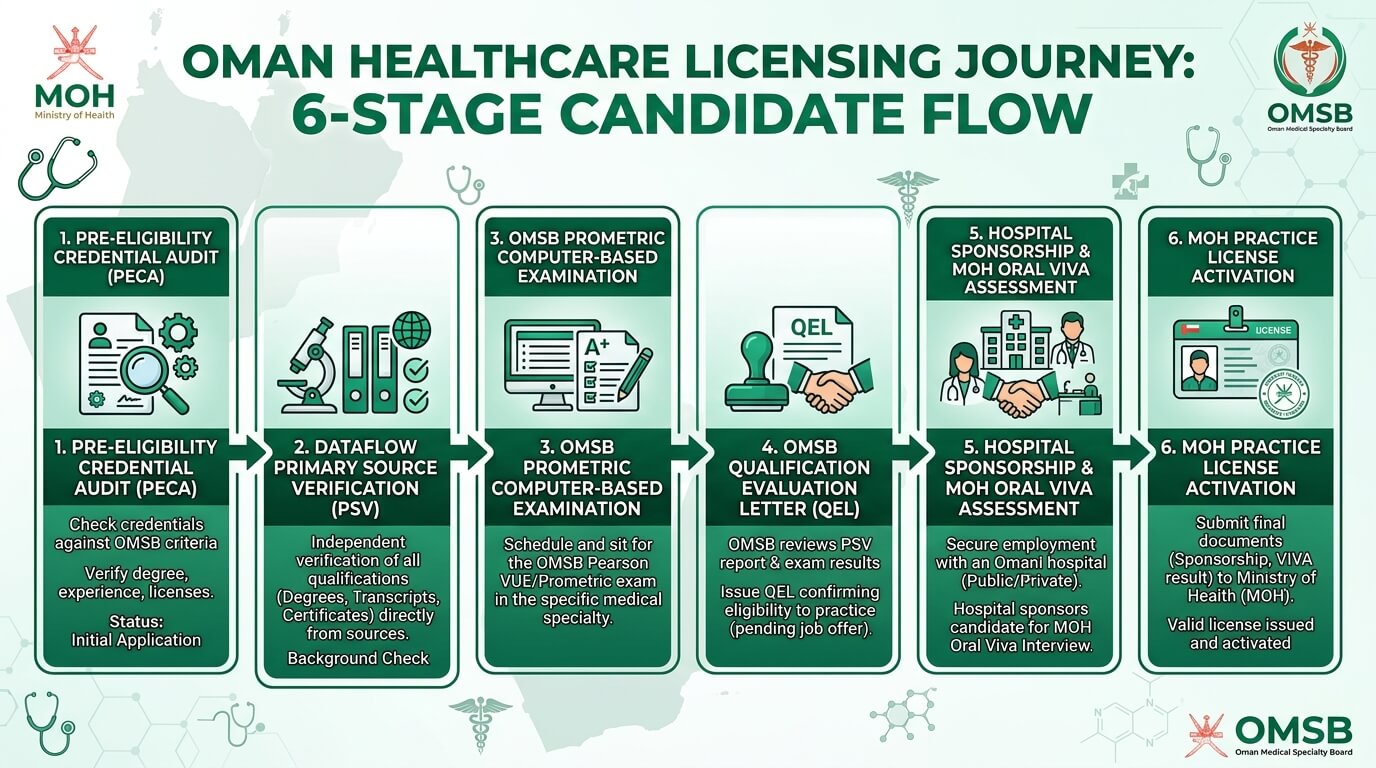
3. Mandatory Primary Source Verification: The Oman DataFlow PSV Process
Primary Source Verification (PSV) is the cornerstone of the Oman healthcare credentialing process. Enforced through an exclusive sovereign mandate between OMSB and the DataFlow Group, PSV ensures that foreign credentials are authenticated directly with the original issuing universities, regulatory boards, and clinical facilities worldwide, entirely bypassing commercial intermediaries and unofficial channels.
Essential Credential Scope for Oman DataFlow Verification
OMSB mandates that all foreign applicants submit a comprehensive dossier for DataFlow primary source auditing. The mandatory verification scope includes the candidate’s highest foundational degree certificate and consolidated academic transcripts, all postgraduate degrees and specialty fellowships, the primary professional council license and current registration card, an official Certificate of Good Standing (CGS) issued within the previous six months, and clinical experience certificates covering the statutory minimum years of practice.
DataFlow forensic investigators independently contact university registrars to confirm degree legitimacy, student enrollment numbers, and graduation dates. They contact state medical, nursing, and pharmacy councils to verify active, unencumbered professional standing. Finally, they contact hospital human resources and clinical administrations to authenticate job designations, dates of tenure, bed capacity, and clinical scopes of practice.
Letter of Authorization (LOA) and 300 DPI Document Intake Standards
To enable DataFlow investigators to legally request confidential records from foreign institutions under international privacy regulations, applicants must execute an official OMSB Letter of Authorization (LOA). The LOA must be physically printed, wet-signed with a pen, and scanned in full color. The signature on the LOA must match the signature on the applicant’s international passport bio-data page precisely. Digital, electronic, or typed signatures will trigger immediate rejection during intake screening.
Furthermore, all uploaded documents must be original certificates scanned in high-resolution full color at a minimum of 300 DPI (dots per inch). Black-and-white photocopies, blurred scans, mobile phone photos taken at oblique angles, cropped margins, or documents with glare are rejected. Any document issued in a language other than English or Arabic must be accompanied by an official certified legal translation executed by an accredited translator, uploaded together with the original source document.
Managing Discrepancies, UTV Status, and Verification Integrity
During the verification lifecycle, DataFlow issues one of three operational status reports: Positive, Discrepancy, or Unable to Verify (UTV). A Positive report confirms complete institutional authentication and allows the candidate to proceed to OMSB evaluation. A Discrepancy report indicates that an institution denied issuing the document, reported altered dates or grades, or detected fraudulent certification; this results in immediate permanent blacklisting across the Sultanate and GCC registries.
An Unable to Verify (UTV) status arises when an issuing university, licensing board, or hospital fails to respond to multiple DataFlow forensic inquiries, often due to administrative backlogs, postal delays, or outdated institutional contact records. Overseas Healthcare Consultant (OHC) provides proactive institutional coordination to prevent UTV delays. We verify contact channels in advance, facilitate direct communications between foreign registrars and DataFlow officers, and resolve administrative inquiries before deadlines expire, ensuring a seamless positive verification outcome.
| Dossier Component | Mandatory Document Specification | Forensic Quality Verification Criteria | Critical Compliance Check |
|---|---|---|---|
| International Passport | Full-color scan of bio-data and address pages | Minimum 6 months remaining validity; clear machine-readable zone | Ensure full name spelling matches educational certificates exactly |
| Educational Degree Certificate | Original final degree certificate from recognized university | Embossed seals, Chancellor signatures, and registrar stamps visible | Provide university roll number, permanent registration, and faculty details |
| Consolidated Academic Transcript | Complete mark sheets or transcript detailing clinical hours | Total credit hours, clinical rotations, and grading scale documented | Required to verify curriculum compliance with OMSB standards |
| Professional Council License | Valid, active registration certificate or license card | Registration number, practicing category, and validity dates unblurred | Must be unencumbered with zero active disciplinary restrictions |
| Certificate of Good Standing (CGS) | Official CGS issued by home medical/nursing/pharmacy board | Issued within the past 6 months; confirms zero malpractice findings | Must be addressed to OMSB Oman or general licensing authority |
| Clinical Experience Certificates | Official hospital letters on corporate letterhead | Contains hospital address, landline telephone, official corporate domain email | Must detail exact clinical designation, full-time hours, and tenure dates |
| Signed Letter of Authorization (LOA) | Physically wet-signed copy of official OMSB authorization form | Signature matches passport bio-data page precisely; current date | Must be uploaded as a clean color scan without electronic signatures |
| Legal Translation Certificate | Certified translation into English or Arabic for foreign documents | Translator stamp, credential number, and signed attestation attached | Mandatory for all non-English and non-Arabic academic or clinical records |
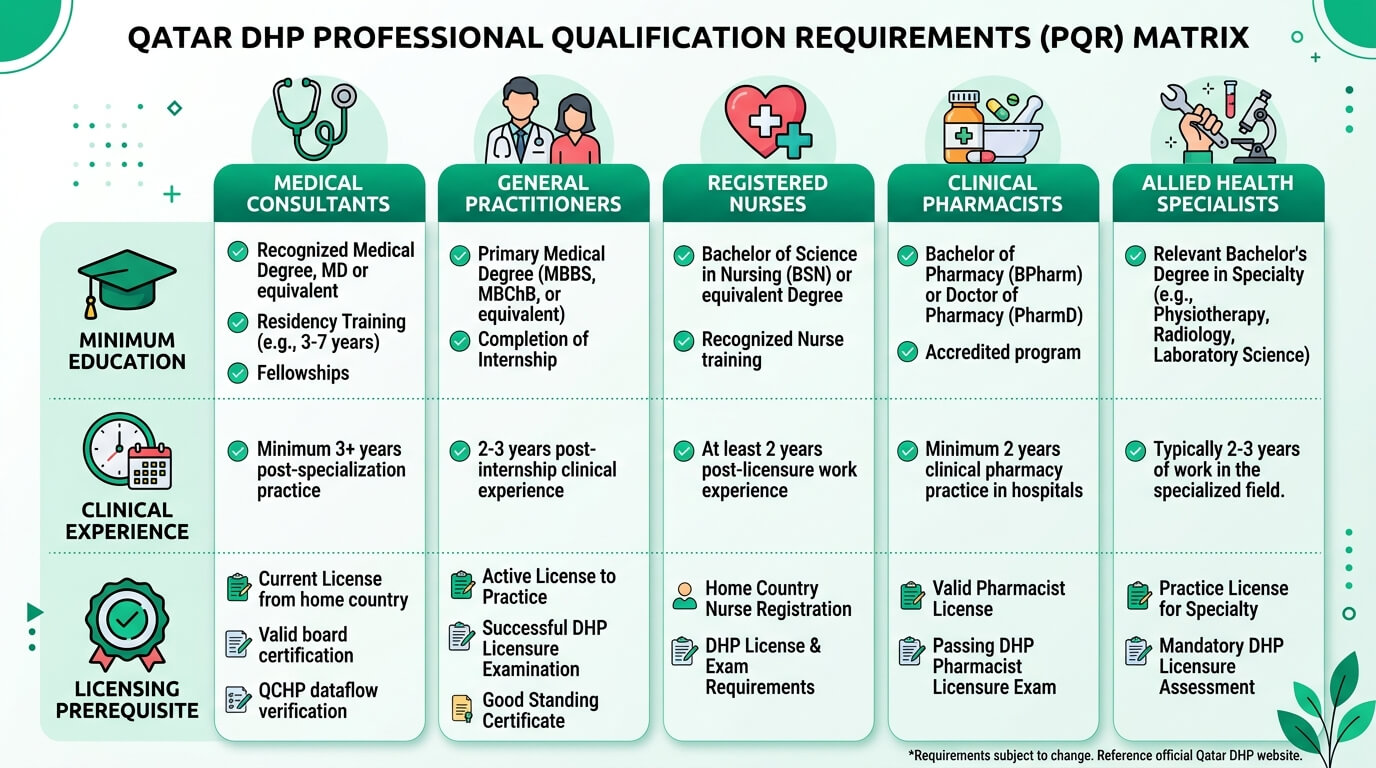
4. OMSB Prometric Qualifying Examination and Clinical Assessment Architecture
To evaluate applied clinical competency and patient safety judgment, the Oman Medical Specialty Board partners with Prometric to administer standardized Computer-Based Testing (CBT) worldwide. Passing the Prometric qualifying examination is a mandatory prerequisite for receiving an OMSB Evaluation Letter and qualifying for the MOH Oman viva assessment.
Prometric Computer-Based Testing (CBT) Blueprints and Passing Thresholds
The OMSB Prometric qualifying examination evaluates applied clinical problem-solving rather than rote memorization. Candidates sit for the assessment in authorized Prometric testing centers globally. For General Practitioners, the examination features 150 multiple-choice questions (MCQs) administered over three hours, with a statutory passing score of 60%. Medical Specialist examinations feature 100 to 150 clinical vignettes focusing on the specialty blueprint, also requiring a 60% passing mark.
For Staff Nurses (both B.Sc and GNM diploma graduates), the OMSB Nurse Prometric assessment consists of 100 multiple-choice questions administered over two and a half hours, with a passing threshold of 50%. Clinical and General Pharmacists complete 100 MCQs in two and a half hours, requiring a 55% passing score. General Dental Practitioners complete 100 questions over two and a half hours, requiring a 60% passing score. Allied health candidates complete 100 MCQs with passing scores ranging from 50% to 55%.
Examination blueprints are carefully structured across core clinical domains. For General Practice, the examination covers Internal Medicine (25%), Pediatrics (20%), Obstetrics and Gynecology (15%), General Surgery (15%), Emergency Medicine and Critical Care (15%), and Medical Ethics and Patient Safety (10%). For Registered Nurses, the blueprint balances Adult Medical-Surgical Nursing (35%), Maternal-Child Health and Obstetrics (25%), Pharmacology and Medication Safety (15%), Infection Prevention and Control (15%), and Professional Nursing Ethics (10%). For Pharmacists, questions center on Clinical Pharmacotherapy and Disease Management (40%), Pharmaceutical Calculations and Extemporaneous Compounding (20%), Drug Information and Pharmacovigilance (15%), Hospital Pharmacy Systems (15%), and Patient Counseling and Clinical Toxicology (10%).
Oral Viva Evaluations and Clinical Interview Requirements by MOH Oman
While OMSB administers the computer-based qualifying assessment, the Ministry of Health (MOH) Oman conducts an in-person or virtual oral clinical examination (viva voce) for candidates entering private and public healthcare employment. The viva assessment evaluates clinical communication, applied diagnostic reasoning, emergency protocols, local Omani health system guidelines, and clinical ethics.
The viva panel typically consists of senior Omani clinical consultants and ministry medical examiners. Candidates are presented with real-world clinical scenarios and asked to explain their diagnostic workup, therapeutic interventions, pharmacotherapy management, and patient escalation pathways. Successfully clearing both the OMSB Prometric CBT and the MOH viva assessment leads to immediate license activation upon hospital sponsorship confirmation.
Candidates preparing for the MOH viva must demonstrate strong command of emergency resuscitation protocols (including Advanced Cardiac Life Support – ACLS, Pediatric Advanced Life Support – PALS, and Neonatal Resuscitation Program – NRP guidelines). Furthermore, examiners assess familiarity with the national communicable disease notification guidelines of Oman, infection outbreak reporting standards, antibiotic stewardship guidelines, and prescription regulations governing controlled substances.
| Qualifying Assessment Category | Total MCQs & Test Duration | Official Passing Score Cutoff | Core Clinical Blueprint Focus Areas |
|---|---|---|---|
| OMSB General Practitioner CBT | 150 MCQs | 3.0 Hours | 60% or Higher | Internal medicine, pediatrics, obstetrics/gynecology, emergency triage, surgery, patient safety |
| OMSB Medical Specialist CBT | 100 – 150 MCQs | 2.5 – 3.0 Hours | 60% or Higher | Advanced specialty diagnostics, therapeutic algorithms, clinical ethics, surgical judgment |
| OMSB Registered Nurse CBT | 100 MCQs | 2.5 Hours | 50% or Higher | Medical-surgical nursing, maternal-child health, infection prevention, pharmacology, basic life support |
| OMSB Clinical & General Pharmacist | 100 MCQs | 2.5 Hours | 55% or Higher | Pharmacotherapy, clinical calculations, drug interactions, dispensing accuracy, patient counseling |
| OMSB General Dental Practitioner | 100 MCQs | 2.5 Hours | 60% or Higher | Restorative dentistry, periodontics, oral surgery, pediatric dental care, infection control |
| OMSB Dental Specialist CBT | 100 MCQs | 2.5 Hours | 60% or Higher | Specialty orthodontic, endodontic, or periodontic diagnostics, biomechanics, oral pathology |
| OMSB Medical Laboratory Technologist | 100 MCQs | 2.5 Hours | 50% or Higher | Hematology, clinical biochemistry, microbiology, blood bank transfusion protocols, quality control |
| OMSB Diagnostic Radiographer | 100 MCQs | 2.5 Hours | 55% or Higher | Radiation safety, radiographic positioning, CT/MRI protocols, cross-sectional anatomy |
| OMSB Physiotherapist CBT | 100 MCQs | 2.5 Hours | 55% or Higher | Orthopedic rehabilitation, neuro-rehabilitation, cardiorespiratory physiotherapy, exercise physiology |
5. Step-by-Step Candidate Journey: From Document Audit to Practice Activation
Securing a healthcare license in the Sultanate of Oman requires an orderly, multi-stage progression through regulatory milestones. Understanding this chronological roadmap ensures candidates manage timelines effectively, avoid bureaucratic bottlenecks, and transition smoothly into Omani clinical practice.
Phase 1 to Phase 6: Complete End-to-End Regulatory Roadmap
The journey begins with Phase 1: Pre-Eligibility Document Audit. In this stage, educational degrees, transcripts, licenses, and experience certificates are evaluated against the OMSB PQR framework to verify institutional accreditation and clinical tenure. Phase 2: DataFlow Primary Source Verification involves submitting the dossier and wet-signed LOA to DataFlow Group to initiate forensic verification with issuing institutions worldwide.
Phase 3: OMSB Prometric CBT Examination can be scheduled concurrently or following initial document screening. Candidates generate their OMSB Eligibility ID, select an authorized Prometric test center, and sit for the exam. Phase 4: OMSB Qualification Evaluation occurs once DataFlow issues a positive PSV report and Prometric transmits passing exam scores, resulting in the issuance of the official OMSB Evaluation Letter.
Phase 5: Hospital Sponsorship & MOH Viva Scheduling involves matching with an accredited Omani healthcare facility (hospital or clinic) that submits the candidate’s file to the Ministry of Health. The candidate completes the mandatory MOH oral viva examination. Finally, Phase 6: MOH Practice License Activation occurs when MOH Oman issues the formal clinical practice license upon viva clearance and visa confirmation.
Understanding Eligibility Letters, Hospital Sponsorship and License Issuance
A critical concept for international clinicians is that the OMSB Evaluation Letter is not a clinical practice license. Rather, it is a formal certificate proving that the candidate has met all statutory qualification criteria and passed the national qualifying assessment. Clinical practice authorization can only be activated under the sponsorship of an accredited healthcare facility licensed by MOH Oman.
Once a healthcare complex offers employment, the institution submits an application to the MOH Directorate General of Private Health Establishments requesting a practice permit. The ministry reviews the facility’s clinical staffing quotas, verifies that the professional’s clinical privileges align with the hospital’s service capabilities, and endorses the visa work permit. Upon arrival in Oman and completion of civil registration, MOH activates the plastic clinical license card and enters the clinician into the national practitioner registry. OHC assists candidates throughout this journey, maintaining dossier validity while coordinating with hiring healthcare organizations.
| Roadmap Stage | Primary Governing Body | Core Operational Actions | Outcome / Candidate Deliverable |
|---|---|---|---|
| Phase 1: Pre-Audit | Overseas Healthcare Consultant | Forensic inspection of degrees, transcripts, council standing, and experience certificates | PQR Eligibility Confirmation & Clean Dossier |
| Phase 2: DataFlow PSV | DataFlow Group / OMSB | Forensic registrar outreach, verification of degrees, licenses, and hospital employment | Positive Oman DataFlow PSV Report |
| Phase 3: Prometric CBT | OMSB / Prometric Network | Eligibility ID generation, test center booking, completion of computer-based assessment | Official Prometric Passing Score Report |
| Phase 4: OMSB Evaluation | Oman Medical Specialty Board | Review of verified DataFlow report and Prometric score; final credential evaluation | Official OMSB Evaluation Letter |
| Phase 5: MOH Viva | Ministry of Health (MOH) Oman | Institutional sponsorship submission, scheduling and completion of oral viva interview | MOH Viva Clearance Confirmation |
| Phase 6: License Activation | Ministry of Health (MOH) Oman | Final credential registration, issuance of official practice license and labor clearance | Active Oman MOH Clinical Practice License |
| Post-Activation Compliance | MOH / Healthcare Employer | Annual clinical license renewal, mandatory CME credit accumulation, infection control updates | Unencumbered Annual License Renewal & Good Standing |
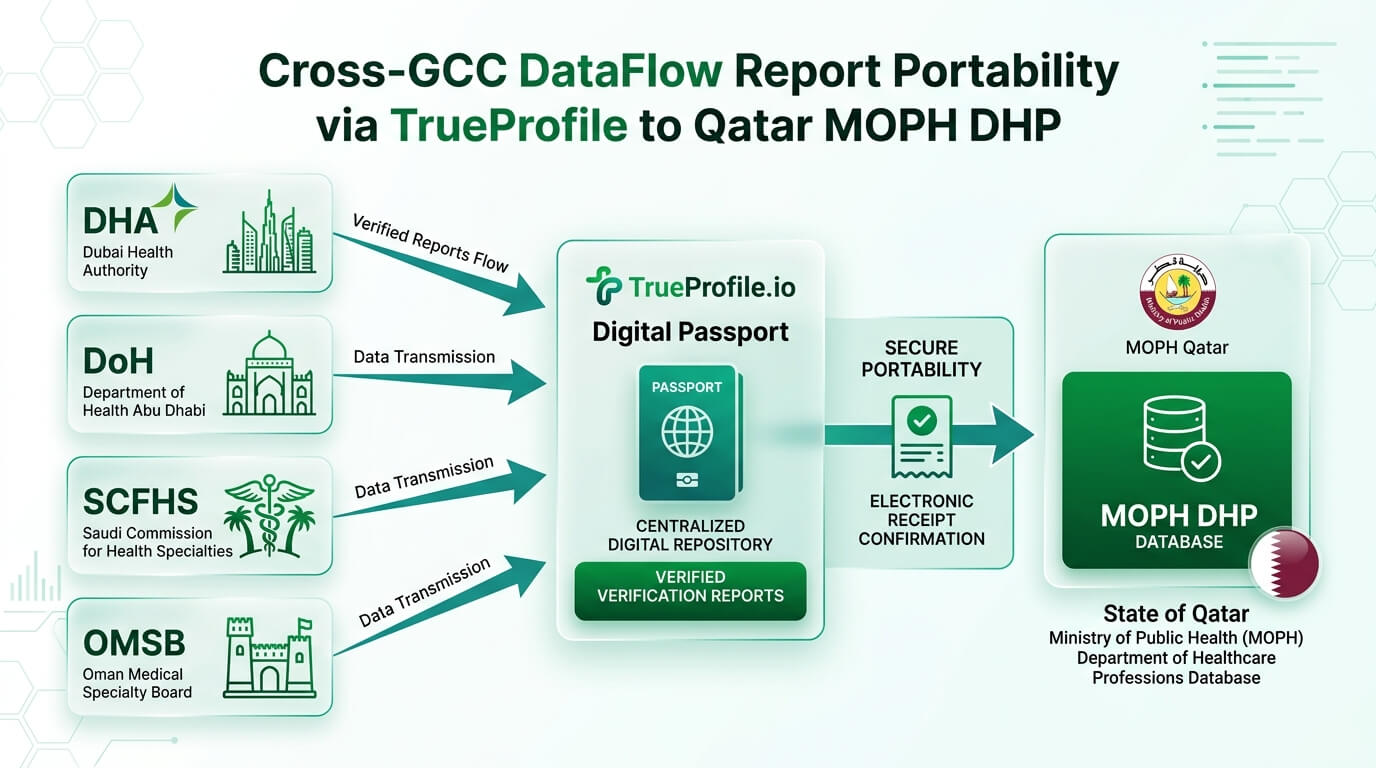
6. Cross-GCC Verification Portability: Transferring Reports via TrueProfile.io
Experienced healthcare professionals who have previously practiced in other Gulf jurisdictions (such as the United Arab Emirates, Saudi Arabia, or Qatar) can leverage cross-GCC credential portability, saving significant time during their Oman licensing process.
Porting Positive Reports from DHA, HAAD, SCFHS and QCHP to Oman DataFlow
Under international healthcare credentialing agreements, Primary Source Verification reports conducted by the DataFlow Group for the Dubai Health Authority (DHA), Department of Health Abu Dhabi (DoH / HAAD), Ministry of Health UAE (MOH UAE), Saudi Commission for Health Specialties (SCFHS), or Ministry of Public Health Qatar (QCHP / DHP) can be ported directly to OMSB Oman through TrueProfile.io.
When a report is transferred, primary source verification data for previously verified academic degrees, historical medical council licenses, and past hospital employment records are carried over automatically without re-contacting foreign institutions. The applicant only needs to verify any new qualifications or recent clinical experience acquired since the previous report was completed.
Procedural Steps for TrueProfile Portability and Receipt Linkage
To initiate a transfer, the applicant accesses their TrueProfile digital passport account, selects the verified credentials, and chooses ‘Transfer Report to Oman Medical Specialty Board (OMSB)’. TrueProfile generates a verified electronic transfer receipt and transmits the records directly into the OMSB verification database. OHC manages this process to ensure that all transferred components synchronize smoothly with the candidate’s active OMSB file.
It is vital to recognize that while Primary Source Verification reports can be ported across GCC health authorities, examination results and practice licenses are jurisdiction-specific. Passing a Prometric examination for DHA or SCFHS does not automatically waive the OMSB Prometric requirement unless a formal reciprocal exemption applies under current bilateral GCC medical council agreements. OHC audits individual candidate profiles to confirm whether examination waivers apply or whether candidate registration requires sitting for the OMSB CBT.
| Originating GCC Health Authority | Portability Mechanism to OMSB | Verified Credentials Carried Over | Remaining Requirements for Oman Licensure |
|---|---|---|---|
| Dubai Health Authority (DHA) | TrueProfile.io Direct Report Transfer | Basic degree, postgraduate diplomas, historical DHA clinical employment | Submit current Certificate of Good Standing; verify post-DHA clinical experience |
| Department of Health Abu Dhabi (HAAD / DoH) | TrueProfile.io Direct Report Transfer | Academic credentials, initial council registration, UAE hospital service records | Provide recent CGS; verify subsequent employment; sign OMSB LOA form |
| Saudi Commission for Health Specialties (SCFHS) | TrueProfile.io Cross-GCC Report Porting | Foundational degrees, Saudi hospital employment records, specialty certificates | Transfer positive report; verify post-Saudi clinical experience; submit home CGS |
| Ministry of Public Health Qatar (QCHP / DHP) | TrueProfile.io Cross-GCC Report Porting | Degrees, Qatar clinical experience, authenticated professional board standing | Update recent clinical experience dossier; link transfer receipt to OMSB file |
| Ministry of Health UAE (MOH UAE) | TrueProfile.io Direct Report Transfer | Undergraduate degrees, transcripts, UAE northern emirates hospital tenures | Submit recent 6-month CGS; verify ongoing clinical practice; attach OMSB LOA |
7. Clinical Experience Currency, Career Breaks and Retest Regulations in Oman
The Sultanate of Oman enforces strict clinical currency and re-examination regulations to ensure that practitioners entering patient-care environments maintain sharp, up-to-date clinical judgment and technical proficiency.
Strict Clinical Currency Requirements and the Two-Year Gap Rule
MOH Oman and OMSB strictly mandate that applicants must have been actively engaged in clinical practice within their designated specialty immediately prior to application. A clinical career break or unverified gap exceeding two consecutive years poses severe regulatory challenges. In such cases, the applicant may be required to complete approved clinical refresher training, retake foundational clinical examinations, or accept a downgraded clinical classification.
Clinicians with career breaks must provide documented proof of continuous medical education (CME), observer-ships, or clinical refresher coursework completed at recognized healthcare institutions. OHC performs clinical gap audits prior to submission to identify potential currency risks and advise on approved regulatory remedies.
Clinical currency regulations are especially stringent for surgical specialties, intensive care nursing, and interventional clinical disciplines where procedural hand skills and emergency reflexes are critical. Candidates with employment interruptions resulting from maternity leave, postgraduate academic study, or family relocation must substantiate that their clinical skills were preserved through formal clinical attachments or hospital locum arrangements.
Examination Attempt Limits, Cooling-Off Windows and Re-Evaluation Rules
Candidates taking the OMSB Prometric CBT examination are permitted up to three attempts to achieve a passing score within an active eligibility cycle. If unsuccessful on the first attempt, the candidate may retest after observing a mandatory cooling-off period of at least thirty calendar days. If a candidate fails three consecutive attempts, their eligibility file is closed, and a mandatory waiting window of one year must elapse before a fresh application can be initiated.
An official OMSB Prometric passing score remains valid for professional registration and evaluation purposes for a statutory window of up to three years from the examination date. If a candidate does not activate an MOH license within this three-year period, the examination score expires and must be repeated.
Similarly, the Certificate of Good Standing (CGS) carries a strict validity lifespan of six months from its date of issuance. If an application encounters administrative delays and the CGS exceeds six months before final OMSB or MOH sign-off, a fresh CGS must be procured from the candidate’s home regulatory council. OHC monitors all document expirations in real time to prevent regulatory lapses.
| Regulatory Condition | Statutory Policy in Oman | Regulatory Consequence of Violation | Recommended Corrective Action |
|---|---|---|---|
| Clinical Experience Gap (>2 Years) | Maximum permitted gap without clinical practice is 24 months | Application placed on administrative hold; risk of qualification rejection | Provide certified clinical attachment, CME credits, or active hospital re-induction |
| CBT Examination Attempt Limits | Maximum of 3 attempts permitted per eligibility cycle | Exhaustion of attempts results in file closure for 12 months | Enroll in intensive OHC clinical coaching for nurses and pharmacists before retesting |
| CBT Retest Cooling-Off Window | Mandatory 30-day waiting period between consecutive attempts | Candidate cannot schedule immediate re-examination on Prometric | Utilize the 30-day window for focused question-bank drills and blueprint review |
| OMSB Passing Score Validity | Passing CBT score remains valid for 3 years from exam date | Score expiration requires full re-examination if license is unactivated | Coordinate with prospective Omani employers to secure MOH licensing within validity window |
| Certificate of Good Standing (CGS) | Must be issued within 6 months immediately preceding submission | Expired CGS rejected during OMSB and MOH licensing review | Request updated CGS from home professional board prior to final submission |
| Letter of Authorization Expiry | Must be signed within current calendar year | Stale LOA triggers DataFlow intake rejection | Download, wet-sign, and upload fresh color scan of OMSB LOA form |
8. Why Partner with Overseas Healthcare Consultant for Oman OMSB Success
Navigating healthcare professional licensing in the Sultanate of Oman requires comprehensive mastery of both OMSB academic evaluation and MOH Oman licensing protocols. A single clerical defect, improper scan, or unverified experience record can stall an application for months. Overseas Healthcare Consultant (OHC) provides elite, end-to-end credentialing and examination management backed by more than 12 years of specialized GCC regulatory experience.
Twelve-Plus Years of GCC Credentialing and Regulatory Mastery
Every applicant partnering with OHC is assigned a dedicated Senior Licensing Officer who conducts a comprehensive, multi-point pre-submission audit of every document before upload. We verify university accreditation standing, audit hospital experience letters against OMSB PQR criteria, inspect passport signature alignment on the Letter of Authorization, and coordinate proactive follow-ups with foreign registrars to expedite DataFlow PSV clearance. This rigorous pre-check methodology ensures a near-zero defect submission record across all clinical categories.
Over the past twelve years, OHC has guided thousands of international healthcare professionals through complex regulatory pathways in Oman, Saudi Arabia, the United Arab Emirates, and Qatar. Our deep familiarity with the administrative hierarchies of the Oman Medical Specialty Board and the Ministry of Health enables us to anticipate bottlenecks, resolve institutional inquiries rapidly, and deliver clear, predictable licensing milestones.
Intensive Clinical Coaching Exclusively for Nurses and Pharmacists
In strict accordance with our institutional standards, OHC delivers live, interactive clinical coaching exclusively for Registered Nurses and Pharmacists preparing for the OMSB Prometric qualifying assessment. Led by experienced clinical educators, our intensive preparation programs feature live clinical vignette analysis, timed mock exams, rationales for high-yield pharmacotherapy questions, and targeted test-taking strategies designed to ensure first-attempt success.
Our nursing curriculum encompasses pediatric dosage calculations, advanced medical-surgical decision trees, emergency triage scenarios, and infection barrier protocols. Our pharmacy curriculum focuses on complex pharmacokinetics, narrow therapeutic index drug monitoring, chemotherapy dosing considerations, and pharmaceutical law. For physicians, dentists, and allied health professionals, OHC provides comprehensive blueprint orientation, syllabus breakdowns, study materials, and examination scheduling management.
End-to-End Dossier Management and Dedicated Senior Licensing Officers
At OHC, our relationship with candidates extends beyond document processing. We act as strategic career partners. From the initial pre-eligibility review through DataFlow primary source verification, Prometric scheduling, OMSB evaluation letter generation, and MOH viva interview preparation, our dedicated officers provide clear, transparent updates at every stage. We empower clinicians to focus on patient care while our regulatory specialists manage the intricacies of Omani healthcare governance.
9. Frequently Asked Questions About Oman OMSB and MOH Licensing
Below are authoritative, direct answers to the most common questions asked by physicians, nurses, clinical pharmacists, dentists, and allied health professionals navigating healthcare licensing in the Sultanate of Oman.
+
+
+
+
+
+
+
+
+
+
+
+
+
+
+
+
Fast-Track Your Oman OMSB & MOH Healthcare Licensing Today
Connect with our senior credentialing specialists and clinical educators. Ensure error-free DataFlow verification, pass your Prometric exam on the first attempt, and secure your Omani practice license smoothly.