


Healthcare Jobs in Oman: Hospital Vacancies, MOH Licensing & Career Placements Across the Sultanate
Secure clinical appointments across Ministry of Health Referral Hospitals (Royal Hospital, Khoula Hospital), Sultan Qaboos University Hospital (SQUH), Aster Al Raffah, Badr Al Samaa, and premier hospital networks throughout the Sultanate. Overseas Healthcare Consultant Bengaluru delivers comprehensive credential evaluation, DataFlow verification, OMSB computer-based exam clearance, and verified hospital placement.
Apply for Oman Healthcare Jobs
Direct Hospital Matching & MOH Licensing Advisory
Regulatory Authority
MOH Oman & OMSB Clinical Privileging
Credential Authentication
DataFlow Group Primary Source Verification
Licensing Exam
Pearson VUE / Prometric Computer-Based CBT
Hospital Networks
80+ Public Referral, SQUH & Private Hospitals
Specialized Guidance
OHC Bengaluru Placement & Coaching
Core Professional, Financial and Lifestyle Advantages of Healthcare Careers in Oman
Discover the exceptional institutional advantages and career growth opportunities available to international healthcare professionals across the Sultanate of Oman.
100% Tax-Free Earnings
Complete exemption from personal income taxes, wealth taxes, and capital withholdings, maximizing annual savings and family wealth creation.
Oman Vision 2040
Massive healthcare investments expanding modern tertiary hospital complexes, regional medical centers, and digital health networks.
JCI & Academic Hubs
Practice in world-class facilities such as The Royal Hospital Muscat, Khoula Hospital, and SQUH with advanced surgical suites.
Family Compound Living
Subsidized executive residential compound housing, annual family flight allowances, international schools, and full family visa sponsorship.
Financial Advantage100% Tax-Free Compensation Packages and Statutory Gratuity
+
100% Tax-Free Compensation Packages and Statutory Gratuity
Choosing to practice medicine, nursing, pharmacy, or allied healthcare in the Sultanate of Oman offers profound clinical fulfillment, rapid professional advancement, and unmatched lifestyle advantages. As Oman continually expands its healthcare infrastructure into cutting-edge tertiary medical centers, international practitioners enjoy exceptional personal and institutional benefits.
All earnings generated from healthcare employment in the Sultanate of Oman are completely exempt from personal income taxes, capital gains taxes, and municipal withholding deductions. Clinicians retain 100% of their earnings, providing outstanding opportunities for family wealth accumulation, long-term savings, and financial security.
Under the Oman Labour Law and civil service employment regulations, all healthcare personnel are entitled to statutory end-of-service gratuity upon contract completion. Hospital employers further augment base earnings with extensive institutional benefits, including furnished executive family housing or generous monthly accommodation allowances, annual round-trip flight allowances for the clinician and eligible dependents, comprehensive private medical insurance, and educational support for dependent children.
Vision 2040 GrowthHealthcare Infrastructure Expansion Under Oman Vision 2040 Transformation
+
Healthcare Infrastructure Expansion Under Oman Vision 2040 Transformation
Under the visionary directives of Oman Vision 2040, the Sultanate is actively decentralizing specialized tertiary healthcare services across all governorates, constructing advanced regional referral hospitals, and integrating digital health networks to serve both urban centers and regional communities.
Clinicians practicing in Oman work within collaborative multidisciplinary teams supported by modern diagnostic imaging architectures, integrated electronic medical record systems (such as the national Al Shifa healthcare management system), and progressive clinical governance frameworks that prioritize patient safety, preventive health, and community wellbeing.
Furthermore, the continuous medical education framework instituted by OMSB ensures that physicians, nurses, and allied specialists participate regularly in accredited clinical workshops, grand rounds, and international symposiums, supporting lifelong learning and career progression.
Clinical ExcellenceModern Tertiary Referral Centers, Academic Institutions & JCI-Accredited Hospitals
+
Modern Tertiary Referral Centers, Academic Institutions & JCI-Accredited Hospitals
The Sultanate of Oman features renowned tertiary medical complexes and academic institutions, many maintaining international accreditation from Joint Commission International (JCI) and global medical bodies. Practicing in facilities such as the Royal Hospital Muscat, Khoula Hospital, or Sultan Qaboos University Hospital exposes clinicians to complex clinical pathology, advanced surgical subspecialties, tertiary trauma management, cardiovascular interventions, and academic research programs.
Working alongside internationally trained multidisciplinary medical peers elevates clinical acumen and reinforces global medical credentials, paving the way for international recognition and fellowship progression. These hospitals maintain cutting-edge medical technologies, including modern cardiac catheterization laboratories, hybrid surgical suites, advanced linear accelerators for radiation oncology, robotic surgical platforms, and tertiary level neonatal intensive care suites.
Lifestyle SecurityFamily-Friendly Lifestyle, Subsidized Housing & Long-Term Employment Residency
+
Family-Friendly Lifestyle, Subsidized Housing & Long-Term Employment Residency
Healthcare appointments in Oman provide exceptional lifestyle security, peace of mind, and a welcoming international community atmosphere. The Sultanate is universally celebrated for its safe living environment, pristine natural landscapes, rich cultural heritage, and warm hospitality.
Hospital employers routinely provide secured residential compound accommodations or generous housing allowances that enable professionals to reside in spacious modern apartments or private villas in Muscat, Sohar, or Salalah. Furthermore, employer-sponsored employment visas provide full family sponsorship privileges, allowing healthcare workers to sponsor their spouses and dependent children with complete legal security. International schools offering British, American, CBSE, and International Baccalaureate (IB) curriculums are widely distributed across Muscat and major regional cities, ensuring outstanding educational continuity for expatriate children in a multicultural, nurturing environment.
Institutional Healthcare Infrastructure: MOH Referral Hospitals, University Centers, and Private Networks
Comprehensive overview of public tertiary referral hospitals, autonomous academic centers, and major private health networks across Muscat, Dhofar, and Al Batinah governorates.
MOH Public Referral Centers
Royal Hospital Muscat, Khoula Hospital, Al Nahdha Hospital, Sohar Hospital, and Sultan Qaboos Hospital Salalah.
Autonomous University & Defense Hubs
Sultan Qaboos University Hospital (SQUH), Armed Forces Hospital (AFH), and Royal Oman Police Hospital.
Aster Al Raffah & Muscat Private
JCI-accredited tertiary private medical centers delivering specialized surgical care, advanced cardiology, and maternal health.
Badr Al Samaa & Starcare Groups
Extensive multi-facility private healthcare networks operating hospitals across Muscat, Sohar, Salalah, Nizwa, Barka, and Sur.
Public Sector HubsMinistry of Health (MOH) Public Referral Centers: Royal Hospital, Khoula Hospital & Regional Hospitals
+
Ministry of Health (MOH) Public Referral Centers: Royal Hospital, Khoula Hospital & Regional Hospitals
The healthcare infrastructure of the Sultanate of Oman is organized across three primary operational sectors: the comprehensive public hospital network overseen by the Ministry of Health, autonomous academic medical centers, and dynamic private tertiary hospital networks. Navigating this interconnected landscape is essential for clinicians targeting specific clinical environments across Muscat, Dhofar, Al Batinah, Al Dakhiliyah, and regional governorates.
The Ministry of Health manages the vast majority of secondary and tertiary hospital capacity across the Sultanate, providing subsidized healthcare for citizens and emergency services for residents. Major public referral centers include:
The Royal Hospital Muscat: The Sultanate flagship tertiary quaternary referral hospital with over one thousand beds, housing the National Oncology Center, the National Genetic Center, and specialized centers for cardiology, pediatrics, and adult medicine.
Khoula Hospital Muscat: The premier national referral center for neurosurgery, orthopedics, plastic surgery, and specialized burn management, handling complex acute trauma from across the nation.
Al Nahdha Hospital Muscat: The national referral center for ophthalmology, otolaryngology (ENT), and maxillofacial surgery, equipped with specialized surgical suites.
Sohar Hospital: Serving the heavily populated North Al Batinah governorate as a major regional trauma, acute surgical, and maternal referral hub with advanced pediatric intensive care and diagnostic facilities.
Sultan Qaboos Hospital Salalah: Serving the Dhofar governorate with comprehensive acute inpatient, specialized surgical, cardiology, and outpatient medical services in southern Oman.
Regional Governorates Referral Hospitals: Nizwa Hospital (Al Dakhiliyah regional center of clinical excellence for cardiology and pediatric care), Rustaq Hospital (South Al Batinah emergency and maternal services), Sur Hospital and Ibra Hospital (critical acute and intensive care services for Ash Sharqiyah), and Buraimi Hospital (border corridor acute medical and surgical services).
Autonomous QuaternaryAutonomous Academic Quaternary Institutions: Sultan Qaboos University Hospital (SQUH)
+
Autonomous Academic Quaternary Institutions: Sultan Qaboos University Hospital (SQUH)
Operating autonomously from the Ministry of Health is Sultan Qaboos University Hospital (SQUH) located in Al Khoudh, Muscat. SQUH is the nation premier tertiary teaching and clinical research hospital, renowned for advanced tertiary subspecialties, bone marrow transplantation, complex cardiovascular surgery, neonatal intensive care, and extensive academic training programs in collaboration with the College of Medicine and Health Sciences.
In addition, the Armed Forces Hospital (AFH) in Al Khoudh provides advanced tertiary medical services for defense personnel, their families, and specialized civilian referrals, featuring modern critical care units and trauma resuscitation theaters. Royal Oman Police Hospital (ROPH) in Muscat further supplements sovereign public healthcare capacity, offering advanced inpatient medical and surgical departments for law enforcement personnel and their families.
Private ConglomeratesLeading Private Healthcare Conglomerates: Aster Al Raffah, Muscat Private, Badr Al Samaa & Starcare
+
Leading Private Healthcare Conglomerates: Aster Al Raffah, Muscat Private, Badr Al Samaa & Starcare
The private healthcare sector in Oman is expanding rapidly, supported by government initiatives, corporate insurance coverage, and growing patient preference for accessible elective and acute clinical care:
Aster Al Raffah Hospitals: Operating JCI-accredited tertiary facilities in Muscat and Sohar, known for advanced laparoscopic surgery, interventional cardiology, orthopedics, and maternal health.
Muscat Private Hospital (MPH): Oman first private tertiary hospital, offering modern diagnostic and surgical capabilities with international physician faculty.
Badr Al Samaa Group of Hospitals: The largest private healthcare network in the Sultanate, operating multi-specialty tertiary hospitals and medical centers across Ruwi, Al Khoudh, Barka, Sohar, Salalah, Nizwa, and Sur.
Starcare Hospitals: Operating modern tertiary facilities in Seeb and Barka, prioritizing clinical governance, patient safety, and European standards of healthcare delivery.
Burjeel Hospital Al Khuwair Muscat: Delivering specialized surgical and outpatient care with premium patient suites and specialized outpatient clinics.
Abeer Hospital Ruwi and Apollo Hospital Muscat: Expanding accessible tertiary and ambulatory services, catering to large expatriate and local populations with dedicated diagnostic imaging and multispecialty clinics.
In-Demand Clinical Disciplines Across Omani Hospitals and Specialized Medical Centers
Active vacancies and recruitment priorities across specialized medical, nursing, pharmacy, and allied health departments throughout Oman.

Physicians & Specialists
Consultants, Senior Specialists, Specialists, and Medical Officers in critical care, trauma, cardiology, and oncology.

Registered Staff Nurses
BSc Nursing professionals for acute intensive care, operation theatres, pediatric ICU, and inpatient wards.

Hospital Pharmacists
BPharm and PharmD graduates managing inpatient unit-dose distribution, sterile IV compounding, and clinical rounds.

Allied Health Specialists
Medical laboratory technologists, diagnostic radiographers, physiotherapists, and respiratory therapists.
Medical DoctorsConsultant, Senior Specialist, Specialist, and Medical Officer Practitioners
+
Consultant, Senior Specialist, Specialist, and Medical Officer Practitioners
Driven by ongoing hospital expansions, demographic development, and the opening of new specialized clinical units across regional governorates, medical facilities across Oman maintain active, continuous recruitment across all clinical cadres.
Omani hospitals recruit international physicians across four recognized professional classification tiers: Consultants, Senior Specialists, Specialists, and Medical Officers (General Practitioners).
Acute recruitment demand is concentrated across the following critical clinical disciplines: Critical Care and Intensive Care Medicine (Adult, Pediatric, Neonatal), Emergency Medicine and Acute Trauma Surgery, Adult Cardiology and Interventional Cardiology, Medical Oncology, Surgical Oncology and Hematology, Pediatrics and Neonatology (Level III and IV NICU), Obstetrics and Gynecology with Fetal Medicine, Orthopedic Trauma, Joint Replacement and Spine Surgery, Anesthesiology and Neuro-Anesthesia, and Family Medicine for community health centers.
Physicians holding Tier-1 recognized international board certifications qualify for accelerated classification and direct appointment to leadership and consultant positions across both MOH and private medical networks. Specialist surgeons in minimally invasive laparoscopy, vascular surgery, urology, and ENT also experience sustained recruitment demand due to increasing regional surgical case volumes.
Nursing CadreRegistered Staff Nurses: Intensive Care, Emergency, Operating Theatre, and Inpatient Wards
+
Registered Staff Nurses: Intensive Care, Emergency, Operating Theatre, and Inpatient Wards
Registered Nurses constitute the largest single volume of healthcare vacancies across the Sultanate of Oman. Both public referral medical complexes and private hospitals actively recruit Bachelor of Science in Nursing (BSc Nursing) graduates who possess verified continuous acute-care hospital experience.
The highest clinical recruitment demand encompasses: Intensive Care Unit (ICU) and Coronary Care Unit (CCU) Nurses; Operating Theatre (OT) Scrub, Circulating, and Post-Anesthesia Care Unit (PACU) Nurses; Emergency Room (ER) Trauma Nurses; Pediatric Intensive Care (PICU) and Neonatal Intensive Care (NICU) Nurses; Oncology and Chemotherapy Infusion Nurses; Hemodialysis and Renal Care Nurses; and Medical-Surgical Inpatient Ward Staff Nurses.
Nurses possessing specialized certifications in Basic Life Support (BLS), Advanced Cardiovascular Life Support (ACLS), and Pediatric Advanced Life Support (PALS) receive distinct recruitment preference during hospital interview selection.
Pharmacy CadreHospital, Clinical, and Ward Dispensing Pharmacist Roles
+
Hospital, Clinical, and Ward Dispensing Pharmacist Roles
Pharmacists in Oman fulfill crucial roles in clinical medication review, hospital inpatient pharmacy operations, patient counseling, and antimicrobial stewardship programs.
Primary openings exist for: Hospital Inpatient Pharmacists overseeing unit-dose distribution and sterile IV admixture preparation; Clinical Pharmacists integrated into inpatient ICU, oncology, and pediatric multidisciplinary rounds; and Outpatient Hospital Dispensary Pharmacists managing high-volume ambulatory pharmacy services across Muscat, Sohar, and Salalah.
Pharmacists with PharmD qualifications or post-baccalaureate clinical hospital residencies are highly sought after by quaternary medical institutions for therapeutic drug monitoring and clinical protocol development.
Allied HealthAllied Health Professionals: Diagnostic Radiography, Medical Laboratory, and Rehabilitation
+
Allied Health Professionals: Diagnostic Radiography, Medical Laboratory, and Rehabilitation
Accurate clinical diagnosis and multidisciplinary rehabilitation depend heavily on skilled allied health technologists. High-volume hospital openings across Oman include:
Medical Laboratory Technologists (MLT / MLS) in clinical biochemistry, microbiology, hematology, and histopathology; Diagnostic Radiographers, CT Technologists, and MRI Specialists; Clinical Physiotherapists and Neurological Rehabilitation Specialists; Occupational Therapists; Certified Respiratory Therapists (CRT / RRT) managing acute mechanical ventilation in ICUs; and Audiologists.
Perfusionists and cardiac catheterization technologists also witness strong recruitment demand as tertiary cardiac centers expand across regional governorates.
Ministry of Health Oman & OMSB Professional Classification Standards
Standardized academic credentials, clinical experience thresholds, and credential verification criteria established by Omani regulatory bodies.
| Professional Cadre | Recognized Educational Qualifications | Mandatory Clinical Hospital Experience | Assessment & Authentication Requirements |
|---|---|---|---|
| Consultant Physician | Tier-1 Board (ABMS, CCT, FRCPC, Facharzt) or Tier-2 (MD/MS/DNB) | Minimum 8+ years post-specialty for Tier-2; direct evaluation for Tier-1 | DataFlow PSV Verification + OMSB Credential Committee Classification |
| Senior Specialist Physician | Recognized Postgraduate Specialty Degree (MD, MS, DNB, Approved Masters) | Minimum 5 to 7 years documented post-specialty clinical practice | DataFlow PSV Authentication + Specialty Assessment Evaluation |
| Specialist Physician | Recognized Postgraduate Degree (MD, MS, DNB, Clinical Fellowship) | Minimum 3 years post-qualification clinical hospital experience | DataFlow PSV Verification + OMSB Computer-Based Examination (Pearson VUE) |
| Medical Officer (GP) | Basic Medical Degree (MBBS) from an accredited medical institution | Mandatory 1-year internship + minimum 2 to 3 years post-internship hospital practice | DataFlow PSV Authentication + General Medicine Computer-Based CBT Exam |
| Registered Staff Nurse | Bachelor of Science in Nursing (4-Year BSc Nursing Degree) | Minimum 2 to 3 years continuous acute-care inpatient hospital practice | DataFlow PSV Authentication + Nursing Computer-Based Exam (Pearson VUE) |
| Hospital Pharmacist | Bachelor of Pharmacy (BPharm) or Doctor of Pharmacy (PharmD) | Minimum 2 years hospital pharmacy or clinical dispensing practice | DataFlow PSV Authentication + Pharmacy Computer-Based Exam (Prometric) |
| Allied Health Professional | BSc in Medical Lab Technology, Radiography, or Physiotherapy (BPT) | Minimum 2 years clinical hospital practice in relevant technical discipline | DataFlow PSV Authentication + Technical Competency Evaluation |
Physician HierarchyPhysician Classification Tiers: Consultant, Senior Specialist, Specialist, and Medical Officer Credentials
+
Physician Classification Tiers: Consultant, Senior Specialist, Specialist, and Medical Officer Credentials
The Ministry of Health Oman and the Oman Medical Specialty Board (OMSB) establish clear, standardized qualification requirements governing all international medical personnel seeking practice authorization in the Sultanate.
Physicians are classified under a defined regulatory hierarchy based on their postgraduate clinical qualifications and documented post-qualification experience:
Consultants: Require Tier-1 international board certifications (such as American Board of Medical Specialties, UK CCT/CCST, Canadian Royal College FRCPC, or German Facharzt) with verified continuous post-specialization clinical experience, or approved Tier-2 qualifications (MD / MS / DNB) with eight or more years of post-degree specialty experience.
Senior Specialists: Require approved postgraduate degrees with minimum five to seven years of documented post-specialty clinical hospital practice.
Specialists: Require recognized postgraduate degrees (MD / MS / DNB / Approved Master Degrees) with minimum three years of documented post-qualification clinical experience.
Medical Officers (General Practitioners): Require a recognized basic medical degree (MBBS) followed by mandatory clinical internship and at least two to three years of post-internship hospital practice.
Nursing CriteriaRegistered Nurse Educational Standards and Mandatory Clinical Experience Benchmarks
+
Registered Nurse Educational Standards and Mandatory Clinical Experience Benchmarks
Under current MOH Oman regulations, candidates applying for the title of Registered Nurse / Staff Nurse must hold a 4-year Bachelor of Science in Nursing (BSc Nursing) from an accredited university or university college.
Candidates must demonstrate at least two to three years of verified continuous clinical experience in an acute-care inpatient hospital environment following graduation and national nursing council registration. In addition, candidate nurses must successfully pass the official computer-based licensing examination administered via Pearson VUE or Prometric.
Diplomas in General Nursing and Midwifery (GNM) are subjected to strict regulatory review and often require additional verified hospital experience or transition degree coursework to meet current MOH titling standards.
Pharmacy & Allied StandardsPharmacist and Allied Health Credentialing and Technical Competency Framework
+
Pharmacist and Allied Health Credentialing and Technical Competency Framework
Pharmacy and allied health candidates require recognized university undergraduate degrees (Bachelor of Pharmacy BPharm, Doctor of Pharmacy PharmD, Bachelor of Physiotherapy BPT, or BSc in Medical Laboratory Technology / Radiography).
Candidates must present at least two to three years of post-registration clinical hospital practice in their respective fields, verified through DataFlow Primary Source Verification, before receiving final licensing clearance from the Ministry of Health Oman.
All candidates must hold an active, unrestricted professional license issued by their home country regulatory body with zero disciplinary actions or malpractice sanctions.
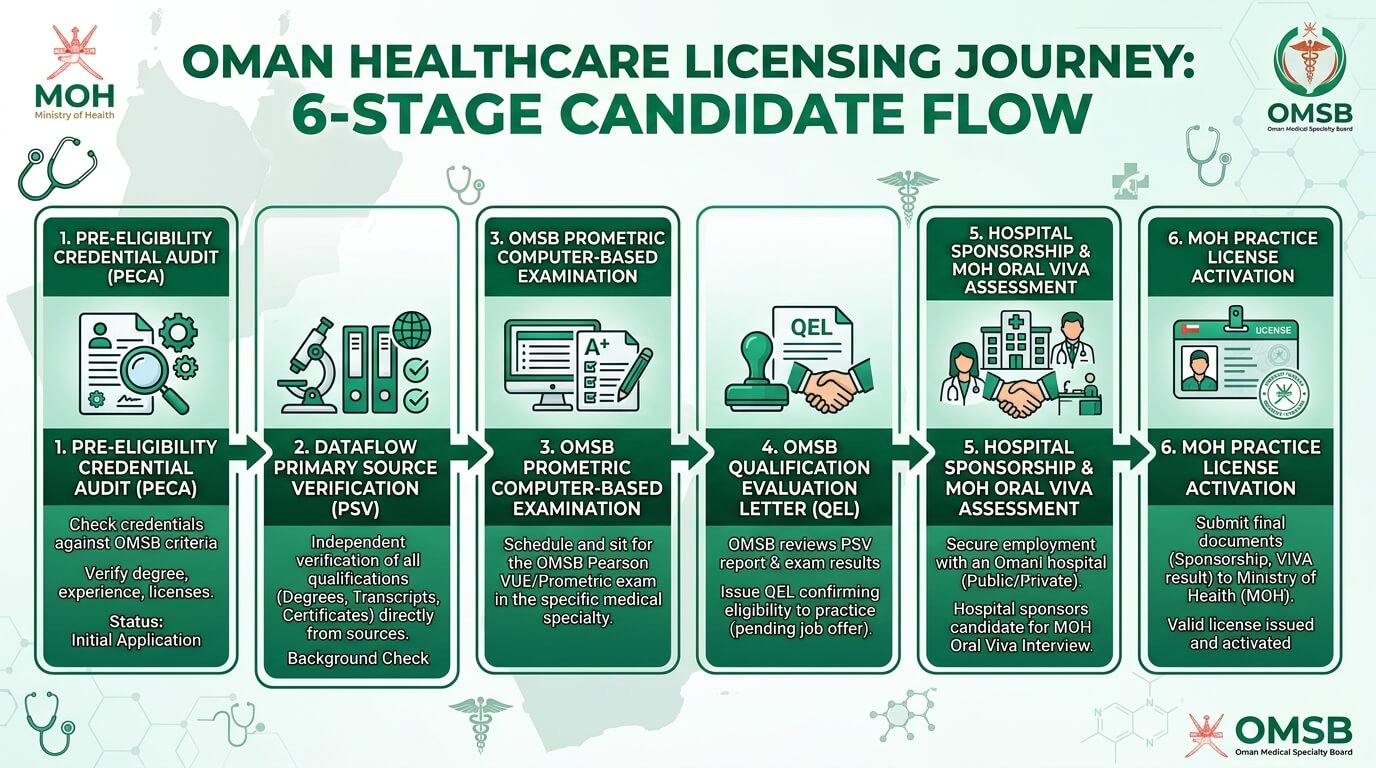
Five-Stage Structured Recruitment and Onboarding Roadmap Across the Sultanate of Oman
A structured, end-to-end recruitment process engineered by OHC to navigate credential verification, examinations, and hospital placement with total transparency.
Eligibility Pre-Check
Comprehensive audit of academic transcripts, council licenses, and hospital experience against OMSB qualification criteria.
DataFlow Verification
Global Primary Source Verification directly with universities, employers, and medical councils worldwide.
CBT Exam Coaching
Computer-based exam scheduling with intensive OHC coaching exclusively for Registered Nurses and Pharmacists.
Hospital Matching
Direct presentation to medical leadership and HR teams across MOH, SQUH, Aster, and Badr Al Samaa networks.
Visa & Onboarding
GAMCA medical fitness screening, visa stamping, flight arrangements, and final MOH practice registration in Oman.
Step 1Step 1: Preliminary Credential Assessment and MOH Oman Eligibility Pre-Check
+
Step 1: Preliminary Credential Assessment and MOH Oman Eligibility Pre-Check
Relocating to practice healthcare in the Sultanate of Oman involves structured regulatory verification, examination clearance, and immigration procedures. Overseas Healthcare Consultant manages every milestone with absolute precision, accountability, and transparency.
The process begins with an in-depth evaluation of your university degrees, marks transcripts, professional council registrations, and hospital experience certificates. OHC cross-references your qualifications against current MOH Oman and OMSB guidelines to verify your exact eligible clinical title (Consultant, Senior Specialist, Specialist, Medical Officer, Staff Nurse, or Allied Health Specialist), preventing costly credential rejections or licensing delays.
Our evaluation audits gaps in clinical practice, validates council good standing eligibility, and confirms that experience letters strictly satisfy Omani formatting benchmarks.
Step 2Step 2: Primary Source Verification (PSV) via DataFlow Group
+
Step 2: Primary Source Verification (PSV) via DataFlow Group
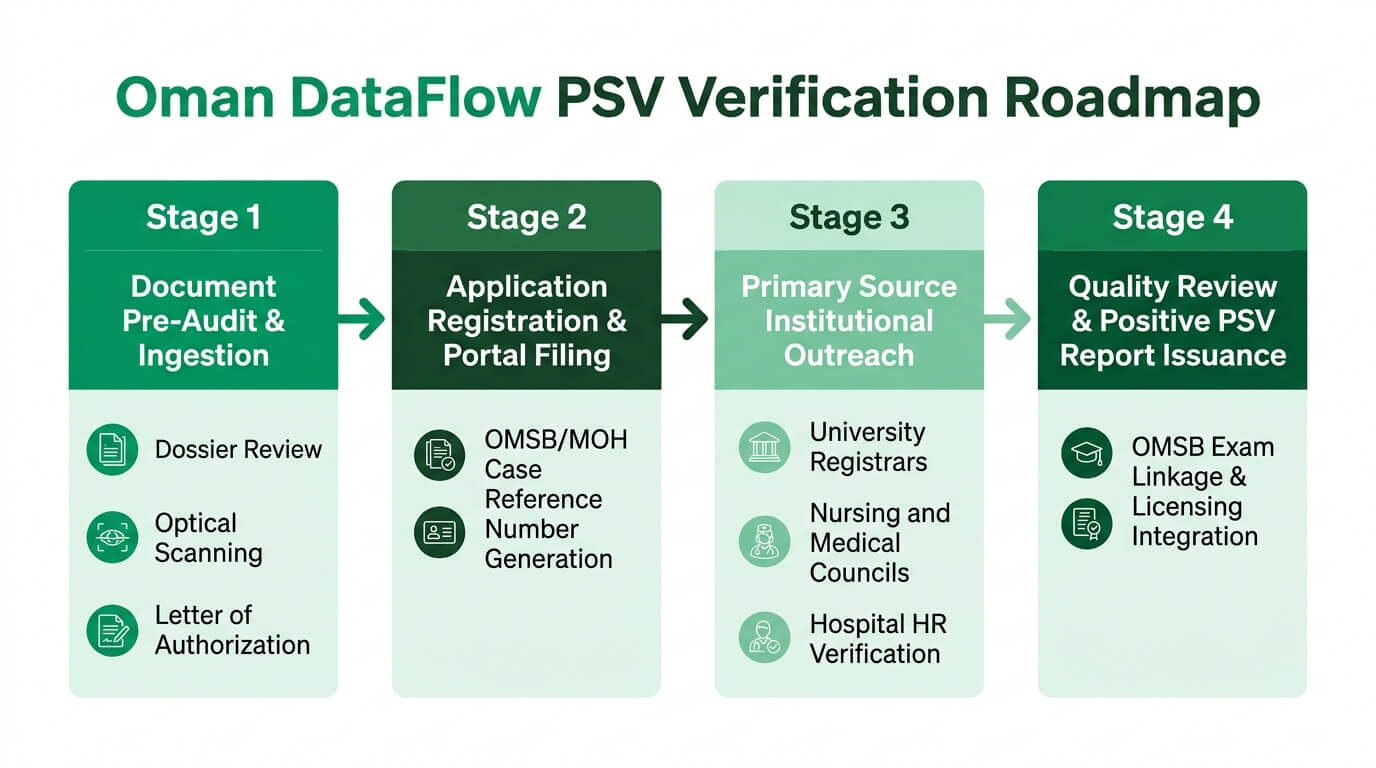
All healthcare practitioners seeking employment in Oman must undergo mandatory Primary Source Verification through DataFlow Group. DataFlow directly authenticates your university degrees, professional registrations, and former employment certificates directly with issuing institutions worldwide.
OHC oversees the complete DataFlow submission, ensuring all application documents are formatted accurately and monitoring verification progress daily to resolve potential verification bottlenecks or institutional delays.
We maintain active coordination with candidate universities and employer hospitals to ensure rapid turnaround of verification responses.
Step 3Step 3: Computer-Based Licensing Examination and Specialized Coaching
+
Step 3: Computer-Based Licensing Examination and Specialized Coaching
Candidates schedule their computer-based licensing examination (OMSB / MOH assessment) through Pearson VUE or Prometric test centers globally.
For Registered Nurses and Pharmacists, OHC provides structured, intensive coaching conducted by experienced clinical educators. Our curriculum includes high-yield clinical question banks, pharmacology review, infection control standards, and timed CBT mock examinations to ensure first-time examination success.
Our clinical trainers focus on critical case scenarios, diagnostic decision algorithms, and patient safety guidelines, giving candidates the confidence required to clear CBT examinations on their initial attempt.
Step 4Step 4: Medical CV Optimization and Nationwide Hospital Interview Presentation
+
Step 4: Medical CV Optimization and Nationwide Hospital Interview Presentation
With examination clearance or eligibility in hand, OHC reformats your clinical resume to align with Omani hospital leadership review standards and applicant tracking systems.
We present your verified profile directly to medical directors, clinical heads, and HR leadership across MOH referral hospitals, SQUH, Aster Al Raffah, Muscat Private, Badr Al Samaa, and leading private networks, coordinating technical virtual interviews.
Our interview orientation briefs clinicians on Omani clinical practice protocols, common interview question frameworks, and department expectations.
Step 5Step 5: Contract Finalization, MOH Registration, Medical Visa & Onboarding in Oman
+
Step 5: Contract Finalization, MOH Registration, Medical Visa & Onboarding in Oman
Upon selection and issuance of an official employment offer, OHC assists in reviewing contract provisions.
We coordinate pre-employment GAMCA medical fitness clearance, document attestation via Omani Embassy channels, employment visa stamping, and flight arrangements. Upon arrival in Muscat or Salalah, the hiring hospital completes your MOH registration and issues your official Oman Resident Card.
Our team remains in contact through your initial hospital orientation period to ensure a comfortable, seamless transition into Omani healthcare practice.
Reciprocal License Conversion Between Oman, UAE, Saudi Arabia, and Qatar Practice Jurisdictions
Streamlined transition pathways for clinicians holding active healthcare licenses across the GCC region.
Exemption from Retaking CBT Exams
Practitioners with active DHA, DOH, or SCFHS licenses and 1 to 2 years of continuous clinical practice frequently qualify for written exam waivers.
DataFlow TrueProfile Transfer
Seamlessly transfer previously authenticated Primary Source Verification reports directly into the MOH Oman system without re-verification.
Accelerated Licensing Timeline
Inter-GCC conversion reduces bureaucratic processing timelines from several months to four to six weeks, expediting hospital employment.
Preservation of Clinical Seniority
Maintains your established years of clinical specialty practice, ensuring proper title classification and senior compensation standing in Oman.
Reciprocal ProtocolsRequirements for Converting Active DHA, DOH, SCFHS, or QCHP Licenses to MOH Oman
+
Requirements for Converting Active DHA, DOH, SCFHS, or QCHP Licenses to MOH Oman
Under regional cooperation agreements established across the Gulf Health Council, medical practitioners holding recognized healthcare licenses in other GCC nations enjoy streamlined pathways to practice in the Sultanate of Oman.
Healthcare professionals currently licensed and practicing under DHA (Dubai), DOH (Abu Dhabi), MOHAP (UAE), SCFHS (Saudi Arabia), or QCHP/DHP (Qatar) can convert their professional standing to MOH Oman.
The candidate must have completed a minimum period of active clinical practice (typically one to two continuous years) in the issuing GCC country and submit a clean, unencumbered Certificate of Good Standing (CGS) issued within the preceding ninety days. Under reciprocal accords, clinicians frequently bypass the requirement to sit for a new computer-based examination.
DataFlow MobilityCertificate of Good Standing Protocols and Inter-GCC Clinical Practice Mobility
+
Certificate of Good Standing Protocols and Inter-GCC Clinical Practice Mobility
DataFlow Primary Source Verification reports generated for other GCC authorities can be transferred directly to MOH Oman through the DataFlow TrueProfile / Cross-Check transfer portal, eliminating duplicate background investigation procedures and expediting processing timelines.
This regional portability empowers clinicians already working in the Gulf to transition into Oman expanding healthcare market with minimal bureaucratic delay, preserving career momentum and continuous seniority.
OHC manages the entire GCC transfer protocol, verifying that previous verification packages and certificates of good standing meet current MOH Oman submission specifications.
Candidate Case Studies: Real Healthcare Careers Across the Sultanate of Oman
Authentic experiences of specialized physicians, registered nurses, and allied health professionals guided to successful appointments across Omani hospitals.
“Relocating my medical practice from Kolkata to Muscat appeared daunting given the complex OMSB qualification criteria. OHC Bengaluru audited my MD credentials, expedited my DataFlow verification, and guided me through the entire licensing protocol. Within weeks, I attended virtual interviews with leading tertiary hospitals in Muscat. Today, I practice in an advanced surgical center in Muscat while my family enjoys a comfortable, secure compound lifestyle. OHC provided ethical, transparent, and exceptional guidance throughout.”
“Securing an ICU nursing position in Sohar was my long-term career ambition. OHC dedicated computer-based exam coaching program for nurses was outstanding, providing high-yield clinical vignettes that enabled me to pass on my very first attempt. Their recruitment specialists connected me directly with hospital leadership in Sohar, managing my GAMCA medical and visa stamping flawlessly. The team in Bengaluru was always accessible on phone and WhatsApp.”
“As a clinical laboratory technologist from Kochi, navigating MOH Oman licensing requirements seemed complicated. The advisors at OHC Bengaluru evaluated my BSc MLT credentials, tracked my DataFlow report daily, and matched me with a premier tertiary hospital in Salalah. The transparency and ethical support were outstanding from day one.”
← Swipe or scroll horizontally to explore verified candidate reviews →
Frequently Asked Questions Regarding Healthcare Careers in Oman
Authoritative answers to essential questions regarding MOH Oman licensing, computer-based examinations, DataFlow verification, and hospital appointments.
1. What regulatory authorities govern healthcare licensing and hospital employment in Oman?
Healthcare practice across the Sultanate of Oman is strictly governed by the Ministry of Health (MOH) Oman in partnership with the Oman Medical Specialty Board (OMSB). The Ministry of Health oversees institutional healthcare licensing, national health workforce planning, and hospital operations across public and private sectors, while the OMSB establishes professional classification guidelines, credential evaluation standards, and clinical examination blueprints.
2. What is the role of the Oman Medical Specialty Board (OMSB) in professional credentialing?
The OMSB acts as the authoritative academic body evaluating postgraduate medical education, training equivalency, and professional licensing exams. It sets the qualification requirements for all physician, dentist, nursing, pharmacy, and allied health classifications, ensuring international candidates meet established clinical benchmarks prior to receiving hospital practice privileges.
3. How long does the complete recruitment and licensing verification process take for Oman?
The end-to-end process from credential evaluation to hospital onboarding in Oman generally spans three to five months. Primary Source Verification through DataFlow Group requires approximately twenty to thirty working days, followed by computer-based exam scheduling, hospital technical interviews, pre-employment GAMCA medical screening, document legalization, and employment visa issuance.
4. Can I attend hospital interviews in Oman prior to passing the computer-based licensing exam?
Select private healthcare groups and regional hospital administrators conduct preliminary virtual interviews based on authenticated CV credentials and DataFlow positive verification reports. However, formal appointment offers and MOH practice license issuance remain strictly contingent upon passing the computer-based examination or securing official exam exemption status.
5. What are the recognized physician classification tiers under OMSB and MOH regulations?
Physicians in Oman are classified into four distinct professional categories based on recognized qualifications and verified clinical practice: Consultant, Senior Specialist, Specialist, and Medical Officer (General Practitioner). Tier-1 international qualifications (such as US Board, UK CCT, Canadian Royal College, or German Facharzt) qualify clinicians for senior classification and direct clinical appointment.
6. Which hospital networks across the Sultanate maintain the highest recruitment demand for international healthcare workers?
Sustained clinical recruitment occurs across public tertiary institutions including The Royal Hospital Muscat, Khoula Hospital, and regional referral complexes in Sohar and Salalah, as well as autonomous academic institutions like Sultan Qaboos University Hospital (SQUH). In the private sector, prominent multi-facility networks including Aster Al Raffah, Muscat Private Hospital, Badr Al Samaa Group, Starcare Hospitals, and Burjeel Hospital maintain continuous vacancies.
7. Is home-country clinical hospital experience recognized for MOH Oman licensing?
Yes. Documented clinical hospital experience acquired in your home country is fully recognized, provided it was completed in an accredited, government-licensed medical facility following degree completion and national council registration, and is authenticated through DataFlow Primary Source Verification.
8. Can I convert an active DHA, DOH, or SCFHS license to MOH Oman without taking a new exam?
Yes. Healthcare practitioners possessing an active, valid practice license from Dubai (DHA), Abu Dhabi (DOH), the UAE Ministry of Health and Prevention (MOHAP), or Saudi Arabia (SCFHS) with at least one to two years of continuous clinical practice and a valid Certificate of Good Standing are eligible for license conversion to MOH Oman, frequently bypassing the requirement for a new computer-based exam.
9. What statutory benefits and allowances are provided in Omani hospital employment contracts?
Standard institutional employment contracts in Oman feature 100% tax-free compensation, furnished family housing or monthly accommodation allowances, round-trip annual flights for the practitioner and eligible dependents, comprehensive health insurance coverage, paid annual leave, and statutory end-of-service gratuity mandated by the Oman Labour Law.
10. What specialized licensing examination coaching does OHC provide for Oman candidates?
Overseas Healthcare Consultant delivers dedicated, high-yield computer-based exam coaching exclusively for Registered Nurses and Pharmacists. Our tailored coaching program includes comprehensive question banks, clinical scenario drills, pharmacology review, infection control protocols, and realistic computer-based mock assessments designed to ensure first-attempt examination clearance.
11. Are international healthcare professionals in Oman eligible for family visa sponsorship?
Yes. Expatriate healthcare professionals appointed under valid Omani employment contracts and holding an official Resident Card are entitled to sponsor their spouse and dependent children for family residence visas, granting full legal residency and access to local amenities and schooling.
12. What documents are required for DataFlow Primary Source Verification for MOH Oman?
Essential submission documents include undergraduate and postgraduate degree certificates, complete academic mark sheets or transcripts, valid home country registration certificates, comprehensive employment experience letters issued by hospital administrators, a clear passport copy, and a signed DataFlow Letter of Authorization.
13. Can General Nursing and Midwifery (GNM) diploma holders qualify as Staff Nurses in Oman?
Under current MOH Oman credentialing directives, the title of Staff Nurse / Registered Nurse requires a four-year Bachelor of Science in Nursing (BSc Nursing). Candidates holding diploma credentials face strict evaluation guidelines and are advised to complete post-basic degree upgrades to ensure eligibility for registered staff nursing vacancies.
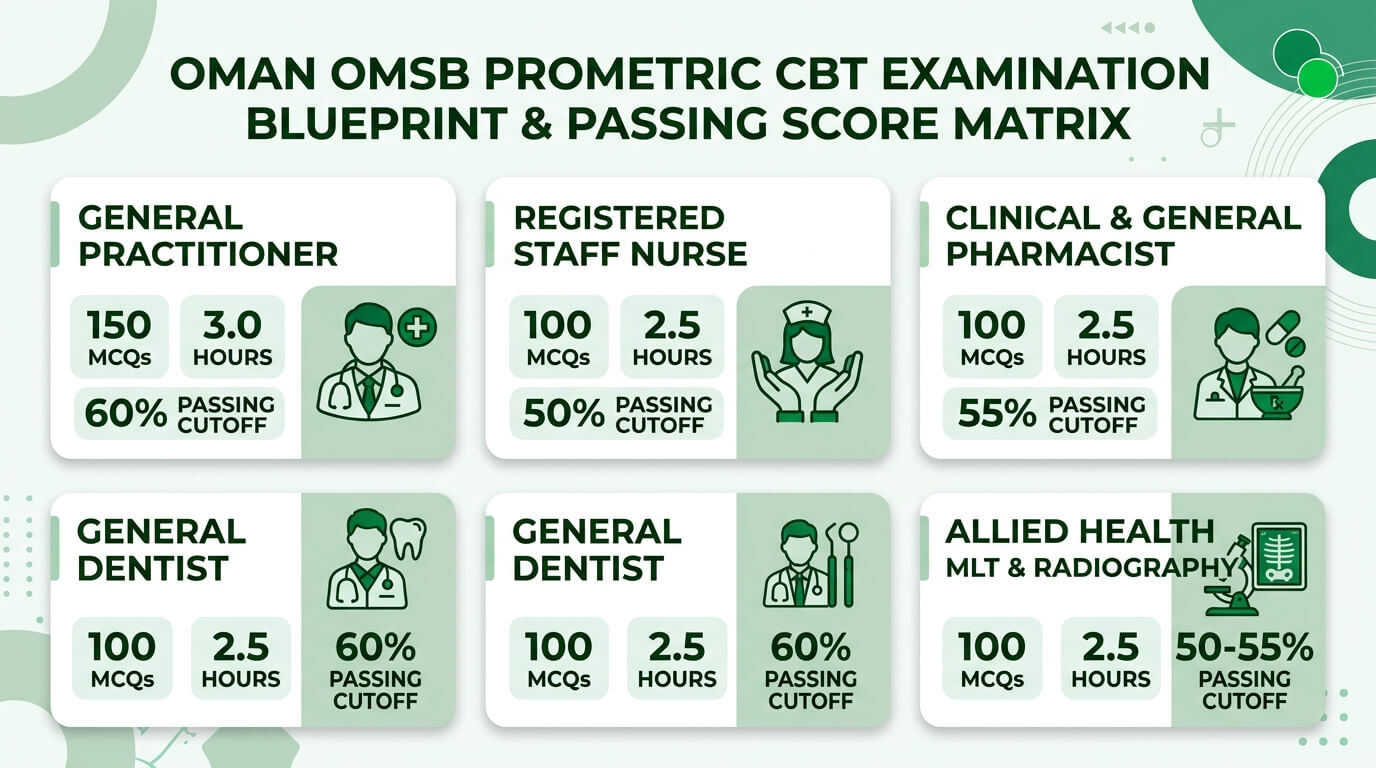
14. What is the structure and passing score for the OMSB Pearson VUE computer-based examination?
The OMSB computer-based exam consists of multiple-choice clinical questions administered through Pearson VUE test centers worldwide over two to two and a half hours. Passing scores typically range between 55% and 65% depending on the specific clinical cadre and specialty blueprint established by the examination committee.
15. Which governorates and cities across Oman present the greatest volume of clinical vacancies?
The highest volume of hospital appointments is located in the Muscat Capital Region (including Seeb, Bawshar, Ruwi, and Al Khoudh), North Al Batinah (Sohar and Saham), Dhofar (Salalah), and Al Dakhiliyah (Nizwa), with additional regional posts in Sur, Rustaq, Ibra, and Buraimi.
16. How do I begin my Oman healthcare job application with OHC Bengaluru?
Initiate your career journey by submitting your comprehensive CV and academic credentials for our expert eligibility review. Contact the Overseas Healthcare Consultant team at our Bengaluru head office by calling +91 96328 62282 or messaging our official WhatsApp helpline at +91 96328 62330.
Begin Your Healthcare Career Across the Sultanate of Oman
Connect with our senior healthcare recruitment advisors at Overseas Healthcare Consultant Bengaluru for comprehensive qualification audits, DataFlow file management, computer-based exam coaching, and direct presentation to hospital clinical leadership throughout Oman.